Homemade Hydroponic Plant Nutrient Solution (Formula and Preparation Method)
Hydroponic plants, as the name suggests, are plants grown in water. So how do you provide nutrients for flowers and plants grown in water? This has become quite a headache for many flower and vegetable growers. Maintaining fertilizer efficiency for hydroponic plants no longer requires ordinary fertilizer, but rather a type of attractive fertilizer. This brings us to the issue of using nutrient solution for hydroponic plants.
Hydroponics is a new type of soilless plant cultivation method, also known as nutrient solution culture. Its core is to fix the plant roots and stems in a planting basket and let the root system hang naturally into the plant nutrient solution. This nutrient solution can replace natural soil in providing water, nutrients, oxygen, temperature and other growth factors to the plant, enabling the plant to grow normally and complete its entire life cycle. Hydroponics, hydroponics - the key is in the water.
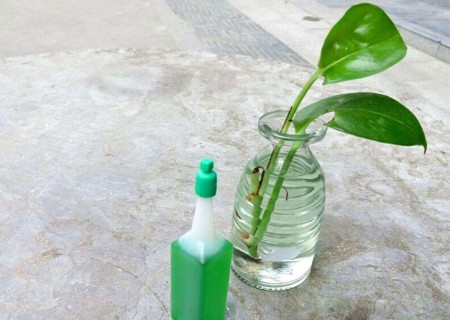
The nutrient solution for hydroponic flowers is very important, but making your own nutrient solution is not difficult. Below, Zuihua Web introduces to everyone the world's most famous hydroponic nutrient solution method:
Nutrient solution formula:
Solution A: 125 grams of calcium nitrate, 12 grams of ferrous sulfate. Add the above to 1 kilogram of water.
Solution B: 37 grams of magnesium sulfate; 28 grams of ammonium dihydrogen phosphate; 41 grams of potassium nitrate; 0.6 grams of boric acid; 0.4 grams of manganese sulfate; 0.004 grams of copper sulfate; 0.004 grams of zinc sulfate. Add the above to 1 kilogram of water.
Preparation process of the nutrient solution:
① Weigh each type of fertilizer separately, place them in clean containers or plastic film bags, or on plastic film bags spread flat on the ground for later use.
② When mixing and dissolving fertilizers, strictly pay attention to the order. Ca2+ must be kept separate from SO42- and PO43-, meaning calcium nitrate cannot be mixed with fertilizers other than potassium nitrate, such as sulfate types like magnesium sulfate, or ammonium dihydrogen phosphate, to avoid calcium precipitation.
③ For the dissolution order of fertilizers in tank A, first use warm water to dissolve ferrous sulfate, then dissolve calcium nitrate, adding water while stirring until evenly dissolved; for tank B, first dissolve magnesium sulfate, then sequentially add ammonium dihydrogen phosphate and potassium nitrate, add water and stir until completely dissolved, dissolve boric acid in warm water and add it, then separately add the remaining trace element fertilizers. Stir both liquid tanks A and B evenly and set aside.
④ When using the nutrient solution, first take 10 milliliters of tank A stock solution and dissolve it in 1 kilogram of water, then add tank B stock solution to this 1 kilogram of water, and it is ready to use.
A crystal-clear glass cup, a graceful green plant growing entirely in transparent water, with glossy leaves extending from the cup, growing vibrantly in a study, office, living room, bathroom or other places - this is a typical hydroponic plant. Many people think too simply about the care of hydroponic plants, believing that buying a dedicated hydroponic nutrient solution from the market and mixing it to the appropriate concentration according to the instructions is enough. In fact, home-grown hydroponic flowers have special requirements for oxygen. The nutrient solution for home-grown hydroponic flowers is in a static state with low dissolved oxygen, which is not conducive to flower growth. The following measures need to be taken to increase oxygen dissolution:
1. Oxygenation by vibration. Hold the flower plant steady with one hand, and gently shake the container with the other hand more than 10 times. After shaking, the dissolved oxygen content of the nutrient solution can increase by about 30%.
2. Increase the frequency of water changes. Changing water means replacing the water in the bottle that has nutrient solution added. Generally, in spring and autumn, change the water once every 5 to 10 days; in summer, change the water about once every 5 days; in winter, change the water once every 10 to 15 days. Home-grown hydroponic flowers should use soft water as the water source; generally, tap water meeting national standards can be used. Let the tap water sit for two hours to half a day, wait until its temperature approaches room temperature and the chlorine in the water has volatilized completely, then add the purchased nutrient solution in proportion, and it becomes a nutrient solution suitable for growing hydroponic plants.
3. Add an appropriate amount of "solid oxygen" to the nutrient solution, or add 1% hydrogen peroxide (3% hydrogen peroxide solution).
4. Use a mini submersible pump or an aeration pump (both are standard aquarium products) to aerate the nutrient solution. The plant roots can obtain sufficient oxygen in such an environment, promoting healthy and robust flower growth.
Below, let me also introduce the experiences of netizens:
Method one: Buy a pack of high-efficiency flower fertilizer at the flower market (one yuan), add water and let it settle clear, then put it in a large bottle for later use. Personally, I think it is better than the flower nutrient solutions sold at the flower market. Note: never add too much to hydroponics; just add a few drops each time. This is the flower market vendor's method, and after using it, I find it can completely replace the so-called flower nutrient solution.
Method two: Just use the compound fertilizer you have at home. Each time you change the water, add 4-5 granules of compound fertilizer to the water. The effect is quite good. Use glass, enamel, ceramic or similar containers to prepare the nutrient solution; never use metal containers.
Additionally, a reminder about precautions for hydroponic flowers:
1. If tap water is used when preparing the nutrient solution, the tap water must be treated, because tap water mostly contains chlorides and sulfides, which are harmful to plants. Also, bicarbonate can hinder the root system's absorption of iron. Therefore, when using tap water to prepare nutrient solution, a small amount of sodium edetate or humate compounds should be added to treat the chlorides and sulfides in the water. If peat is used as the substrate in hydroponic flower cultivation, the above disadvantages can be eliminated. If the groundwater quality is poor, unpolluted river water or lake water can be used for preparation.
2. If you do not use nutrient solution and only use ordinary water culture, that is fine too, only the growth will be somewhat worse and slower. Normally, the cultivation water in the pot should be changed once every one to two months. Tap water can be used, but be sure to let the tap water sit for a period before use to keep the root temperature stable.
3. Hydroponic flowers are mostly shade-loving and neutral flowers suitable for indoor cultivation, and they have their own requirements for light. Shade-loving flowers such as ferns, orchids and Araceae plants should be moderately shaded; medium-sized flowers such as Monstera deliciosa, Schefflera arboricola and poinsettia are not strict about light intensity and usually prefer sufficient sunlight, and can also grow normally under shade. Ensuring the temperature for normal flower growth is very important; flower roots grow better within the range of 15-30 degrees.
4. Pay attention to identifying the root color of the flowers to determine whether they are growing well. When light, temperature and nutrient solution concentration are appropriate, the whole root or root tip is white. Please note: it is strictly forbidden to overdose the nutrient solution, and strictly forbidden to shorten the time interval for adding nutrient solution.
5. During the growth of hydroponic flowers, if water droplets are found seeping from the leaf tips, appropriately lower the water surface height so that more roots are exposed to the air, reducing the proportion submerged in water, which helps oxygen absorption.