A Detailed Guide to Growing Beaucarnea recurvata from Seed
Beaucarnea recurvata, also known as the elephant-foot tree, belongs to the family Ruscaceae (Nolinaceae). It is a foliage plant of the genus Beaucarnea and an evergreen small tree. It is native to the hot, dry regions of Mexico. Beaucarnea recurvata is a tree-like succulent; in its native habitat it can reach 10 m in height, while potted specimens generally grow 0.5-1.0 m tall. Its stem has a peculiar shape, with a particularly swollen base that closely resembles a large wine bottle, and together with bark that cracks into small squares and tufted, gracefully swaying leaves, it makes a very unusual ornamental plant.
Beaucarnea recurvata is a foliage plant with extremely high ornamental value. Many flower enthusiasts find after getting one that they have no idea how to grow it, causing this elegant plant to gradually lose the value it should have. So how should Beaucarnea recurvata be sown?
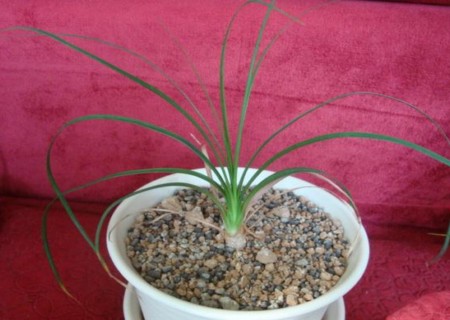
1. Soil mix
For potting Beaucarnea recurvata, a mix of 2 parts leaf mold, 1 part garden soil, 1 part river sand and a small amount of plant ash can be used as the growing medium.
2. Seed selection
Before sowing, the seeds must first be selected. It is best to use seeds harvested in the current year, as the longer the seeds are stored, the lower their germination rate; choose plump seeds with no damage or deformity and no pests or diseases.
3. Disinfection
Disinfect the growing medium used for sowing; the best method is to heat it in a pot until hot, which will kill any pests and diseases. To disinfect the seeds, soak them in hot water at about 60°C for a quarter of an hour, then use warm water to pre-sprout them for 12-24 hours.
4. Pre-sprouting
Soak the seeds in warm water (at a temperature similar to face-washing water) for 12-24 hours, until the seeds absorb water and swell. For very common seeds that germinate easily, this step can be skipped.
5. Sowing
First, use a tool or a water-moistened toothpick to pick up the seeds and place them on the surface of the growing medium, then cover with 1 cm of medium. Next, place the pot in water with the water level half way up the pot, letting the water soak in slowly; larger seeds can be placed directly into the medium and then covered with a layer 2-3 times the thickness of the seed. After sowing, spray to moisten the medium, then water again when the potting soil dries out. Be sure to water by sprinkling rather than pouring too heavily, which would wash the seeds out.
6. Care
During the growth of young plants, fertilizer and water management should be strengthened: apply dilute liquid fertilizer frequently and in small amounts, and increase potassium fertilizer to help the stem swell and fill out. In addition, plants grown for many years sometimes produce small offsets at the base of the stem; these buds can also be cut off and propagated by cuttings. However, be sure to disinfect the wounds to prevent rot.
Because Beaucarnea recurvata is relatively drought-tolerant, it should not be watered too much, otherwise the roots rot easily. In spring and autumn, water only when the soil is dry and let it dry between waterings; in summer keep it moist; in winter water only when the soil is dry. During the growing season, apply a dilute liquid fertilizer once every half month when grown outdoors; when grown indoors, granular fertilizer is preferable to avoid polluting the air. For potting, use fertile sandy soil, mixed with equal parts garden soil, leaf mold and coarse sand. Repot and change the soil every spring or after autumn to keep the potting soil well aerated. Whether potting up or repotting, the swollen base should be left exposed above the soil for people to admire.
During the growing season from March to October, strengthen fertilizer and water management to promote swelling of the stem. Because the swollen stem can store a certain amount of water, the plant is quite drought-tolerant, so water only enough to keep the potting soil moist, following the principle of preferring dry over wet, and avoid waterlogging in the pot, otherwise the fleshy roots and stem rot easily.
Especially after the temperature drops in late autumn, reduce watering to increase the plant's cold resistance. During the growing season, apply liquid fertilizer or compound fertilizer twice a month, and be sure to increase phosphorus and potassium fertilizer when feeding.
When the climate is dry and ventilation is poor, Beaucarnea recurvata is prone to scale insects; if scale insects are found, spray insecticide to control them.