Detailed Guide to Beaucarnea recurvata Cutting Propagation, Even Beginners Can Learn
As a foliage plant grown for its striking stem and leaves, Beaucarnea recurvata brings a novel and distinctive feel when used to decorate living rooms, studies, hotels, and venues. It can be planted in various sizes for indoor decoration: small plants in exquisite pots placed on desks or tabletops look elegant and refined; medium to large potted plants used to decorate halls, meeting rooms, reception rooms, hotels, shopping malls and other places are full of tropical charm and highly enjoyable to admire.
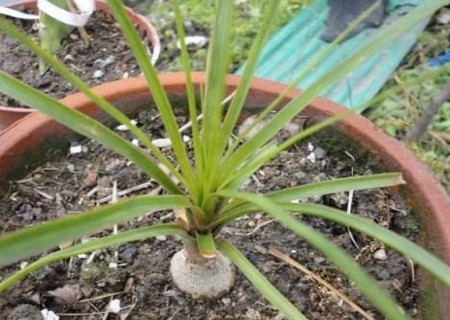
In the propagation of Beaucarnea recurvata, many gardening enthusiasts like to use the cutting method. Beaucarnea recurvata sometimes also produces side branches, which can be propagated by cuttings, but unlike other plants in the Agavaceae family, Beaucarnea recurvata does not produce many suckers at the root crown, only a few side branches.
1. Cutting medium
For potted Beaucarnea recurvata, a mix of 2 parts leaf mold, 1 part garden soil, 1 part river sand and a small amount of plant ash can be used as the medium. For home cuttings, due to limited conditions, it is difficult to obtain an ideal cutting medium. Do not use sea sand or river sand from saline-alkali areas, as they are not suitable for the growth of Beaucarnea recurvata.
2. Cutting time
Beaucarnea recurvata cuttings are usually taken in late spring or early autumn using current-year branches for softwood cuttings, or in early spring using last year's branches for hardwood cuttings.
3. Selection of cuttings
When doing hardwood cuttings of Beaucarnea recurvata, after temperatures rise in early spring, select robust branches from the previous year as cuttings. After cutting the branches off, choose the sturdy parts and cut them into sections 5-15 cm long, each section carrying more than 3 leaf nodes. Each cutting usually retains 3-4 nodes, and the cutting method is the same as for softwood cuttings.
When taking cuttings, note that the upper cut should be made flat about 1 cm above the topmost leaf node, and the lower cut should be made at an angle about 0.5 cm below the bottommost leaf node. Both the upper and lower cuts must be smooth, and the knife must be sharp.
4. Cutting techniques
After propagating from side branches, it takes quite a long time to form a bottle-shaped trunk. You can cut off the part of a Beaucarnea recurvata with an irregular stem shape and propagate it by burying the stem, so that it grows into a new plant. At the same time, you must pay attention to disinfecting the wound to prevent rot. After cutting off the cuttings and letting them dry slightly, insert them into a sand bed and increase air humidity. They can root about 15-20 days after insertion.
5. Care and management
1) Temperature
The optimum temperature for cutting rooting is 20°C-30°C. Below 20°C, cuttings root with difficulty and slowly; above 30°C, the upper and lower cuts of the cuttings are easily infected by pathogens and rot, and the higher the temperature, the greater the proportion that rot.
When low temperatures are encountered after cutting, the main measure for keeping warm is to wrap the flower pot or container used for cuttings with plastic film; when the temperature is too high after cutting, the main cooling measure is to shade the cuttings, blocking out 50-80% of sunlight. At the same time, mist the cuttings 3-5 times a day. On sunny days when the temperature is higher, mist more often; on cloudy and rainy days when the temperature is lower and humidity is higher, mist less often or not at all.
2) Light
Cutting propagation cannot do without sunlight, because the cuttings still need to continue photosynthesis to produce nutrients and rooting substances to supply what Beaucarnea recurvata needs for rooting. However, the stronger the light, the higher the temperature inside the cuttings, the more vigorous the transpiration of the cuttings, and the more water they consume, which is not conducive to the survival of the cuttings. Therefore, after cutting, 50-80% of sunlight must be blocked. After the root system grows out, gradually remove the shade net: on sunny days, remove the shade net at 4:00 p.m. each day and put it back before 9:00 a.m. the next day.
3) Fertilizer and water
During the growing season from March to October, strengthen fertilizer and water management to promote stem swelling. Because the swollen stem can store a certain amount of water and has strong drought tolerance, when watering, aim only to keep the potting soil moist and follow the principle of preferring dry over wet, avoiding water accumulation in the potting soil, otherwise the fleshy roots and stem are prone to rot. Especially after late autumn when temperatures drop, reduce the amount of watering to improve the plant's cold resistance. During the growing period, apply liquid fertilizer or compound fertilizer twice a month, and when fertilizing, pay attention to increasing phosphorus and potassium fertilizer.
4) Pruning
Beaucarnea recurvata is tolerant of poor soil and pruning. According to landscaping needs, it can be pruned into various shapes, and frequently pruning old leaves can promote the plant's height growth. In winter, when the plant enters dormancy or semi-dormancy, cut off weak, diseased, pest-infested, dead, and overly dense branches. Branch organization can also be combined with cutting propagation.