How to Propagate Aspidistra? Detailed Guide to the Division Method
Aspidistra stays evergreen all year round, with upright and neat leaf shapes, deep green and glossy leaf color, and a graceful, elegant and refined posture. At the same time, it grows vigorously, has strong adaptability, and is extremely shade-tolerant, making it an excellent shade-loving foliage plant for indoor greenery decoration. It is suitable for placement in homes and offices, and can be enjoyed on its own, or arranged together with other flowering plants to set off the bright colors and beauty of other flowers. So, how do you propagate Aspidistra?
Aspidistra is very suitable for home cultivation, and when growing Aspidistra as a potted plant at home, the division method can be used for propagation. When propagating, pay attention to the choice of division time, the application of the division method, and the care after division.
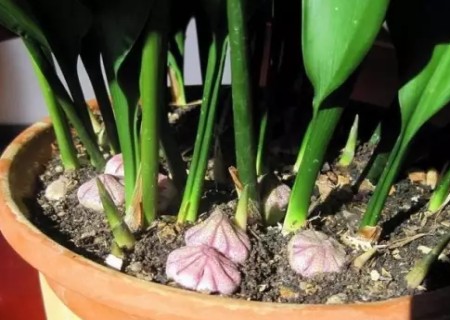
With the division method, propagation can be carried out in March in spring. Dig the large clump of plants out of the soil, gently shake off the old soil, and cut it open along the direction of the rhizomes with a sharp knife, making sure each clump of rhizomes has 8-9 buds. Place the divided new Aspidistra plants in a shaded spot to air-dry for half a day, and they are ready to be planted.
When repotting in spring, take the mother plant out of the pot soil, separate the tangled root system with a small knife, keeping 2-5 leaves to help it survive, and water thoroughly after potting.
Aspidistra is mainly propagated by division. It can be done in spring when the temperature rises and before the new buds have sprouted, combining division with repotting. Cut the underground rhizomes together with the leaves into several clumps, making sure each clump has 3-5 leaves, then plant them separately in pots and keep them in a semi-shaded environment for care.
1. Division time
For the division propagation of Aspidistra, it can be done in spring when the temperature rises and before the new buds have sprouted, combining division with repotting. It is generally carried out in early spring (February or March) after the soil thaws.
2. Division method
Take the mother plant out of the flower pot, shake off the excess pot soil, separate the tangled root system as much as possible, and cut it open into two or more plants with a sharp small knife. Each divided plant must have a considerable amount of roots, and its leaves should be properly pruned so that each clump has 3—5 leaves, to help it survive.
3. Potting and disinfection
Soak the divided small plants in a 1500-fold chlorothalonil solution for five minutes, take them out and let them dry, then they can be potted. Alternatively, right after potting, drench the roots with chlorothalonil.
4. Care method
Aspidistra has strong adaptability and grows relatively fast, and it should be repotted once every 1-2 years. Use a culture soil mixed with equal parts loam, leaf mold and river sand. When repotting, apply a small amount of crushed bone pieces or cake fertilizer powder as a base fertilizer, and after planting, water thoroughly and place it in a cool spot for care. During the growing period, water adequately and frequently spray water on the leaves to maintain relatively high air humidity. Apply 1-2 times a month of dilute liquid fertilizer to encourage new leaf sprouting and robust growth.
Variegated varieties should be given light fertilizer; if the fertilizer is too rich, the spots on the leaves tend to disappear. In summer, avoid direct sunlight, but pay attention to ventilation and promptly remove yellow leaves. When new leaves are sprouting and in the stage of new leaf growth, they must not be placed in a dark indoor spot, otherwise the new leaves will grow thin, long and weak, affecting their ornamental value. In northern regions, they should be moved indoors in winter, with reduced watering and stopped fertilization; if the pot soil is too wet at this time, it easily causes root rot.