Bougainvillea air layering propagation method illustrated, step-by-step guide
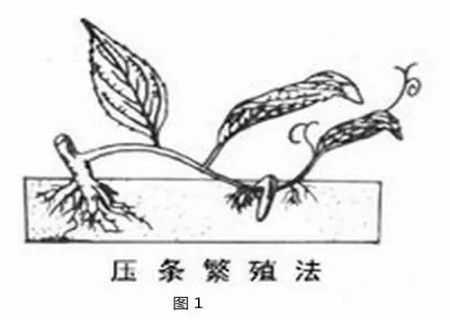
Some beginner gardeners don't understand what air layering propagation is. Air layering is a type of layering propagation, and layering is divided into air layering and ground layering. Ground layering simply means bending a branch directly down to the ground, as shown in Figure 1. Air layering (Figure 2), on the other hand, is used because some plants have branches that are difficult to bend; the branch is cut or ring-barked and then wrapped with sandy soil (or another medium) to propagate.
Below we'll explain the concept of air layering propagation, then look at a specific case:
Air layering is also called air layering. It was created in China, also known as Chinese layering, and is suitable for tall or difficult-to-bend plants, mostly used for valuable tree species (camellia, osmanthus, longan, lychee, sapodilla, etc.). Select 1-3 year old branches, ring-bark 2-4 cm, scrape off the cambium or make longitudinal cuts as wounds, wrap the cut area with plastic film, split bamboo tubes, clay pots, etc., tie firmly in place, fill with moss or fertile soil, water frequently to keep moist, and after roots form, cut off to make a new plant.
Now let's look at a specific case of bougainvillea air layering propagation:
The case uses paper towels. In practice, you can use plastic bags, disposable cups, etc. filled with soil or another medium - all work. Gardeners don't need to stick rigidly to the case, since the case is just one method of bougainvillea air layering propagation. Our purpose in showing it is to provide gardeners with a process reference.
1. Ring-barking, width about 0.5-1cm. Scrape the cambium clean from the branch.
2. You can apply rooting powder solution to the wound.
3. Wrap a paper towel around the wound, tie it firmly, then wrap with plastic wrap and tie it well (using a paper towel is only one of the few methods; most people wrap soil around the wound and then cover it with a plastic bag, see the second image below, an example of rose air layering propagation).
4. Inject water into the paper towel, soaking it thoroughly. Afterward, replenish water to the paper towel as needed.
5. Wrap paper on the outside of the paper towel to block light.
6. Roots form in about a month. Cut off the branch and pot it up together with the paper towel to acclimatize.
Air layering propagation (abbreviated as air layering) is a commonly used propagation method in bougainvillea cultivation. Friends in the north with heating can do air layering regardless of season; friends in the south can start air layering after late April.
Air layering propagation has several advantages: First, a high survival rate. Any branch that has produced roots through air layering, once cut off, as long as the roots are not damaged, will survive 100% when transplanted into a pot. Second, basically no need for acclimatization. After transplanting, just place it in a cool spot for a few days and the roots will spread out, with leaves basically not wilting or drooping. Third, it's easy to shape. Air layering a large branch and planting it in a new pot immediately gives you a sturdy, beautiful potted flower. With a little pruning, it takes on the feel of a bonsai.
The specific method is very simple: make a 0.3 cm wide cut above the fork where the branch to be air layered meets the mother plant, about two inches up, ring-barking it; clean the surface layer down to the cambium, wrap with a plastic bag filled with fertile, loose, moist soil, and tie both ends tightly. If the soil dries out midway, you can inject water with a discarded syringe. Wrapped in a plastic bag, it generally doesn't lose water easily, so you can also skip watering. After more than a month, you'll see many roots growing (as shown below), and then you can cut it off and transplant. Below are two processes of air-layered plants surviving and being transplanted. After many trials, the results are all very good. This mature technique is worth promoting.
A plant of 'Da Hong' has two main trunks. Air layer the smaller trunk; after a month quite a few roots are visible, and they are quite thick. It's time to separate it from the mother plant.
The above image shows how it looks after being cut off. The very thin plastic bag has been pierced through by the roots.
Carefully open the plastic bag. The roots are extremely vigorous, wrapping around the soil ball to form a root ball; even when the plastic bag is opened, it doesn't fall apart.
Then carefully move it into a flower pot prepared with potting soil. Pile up some soil on one side so the root ball can lean against it and the plant stands upright, for the sake of the photo.
With your hands free, cover the roots completely with soil, press it firm, water to settle the roots, and you have a beautiful medium-sized potted flower! Afterward, cover the root ball completely with soil, press firm, water, and bougainvillea air layering propagation is done!