How to propagate the Norfolk Island pine? A detailed guide to common propagation methods
The Norfolk Island pine originates from the southeastern coastal regions of Oceania, such as northern Australia. It is now introduced and cultivated in provinces including Guangdong. Some cities in northern China began introducing Norfolk Island pine bonsai in 2002, and they have grown well. The Norfolk Island pine is a highly ornamental tree species and is rated as one of the world's three major ornamental trees, and it is now very popular in China. The Norfolk Island pine has extremely strong vitality and stays evergreen year-round. It is an expert at purifying the air and is suitable for care in indoor spaces with insufficient light, so growing a Norfolk Island pine potted plant at home is a good choice.
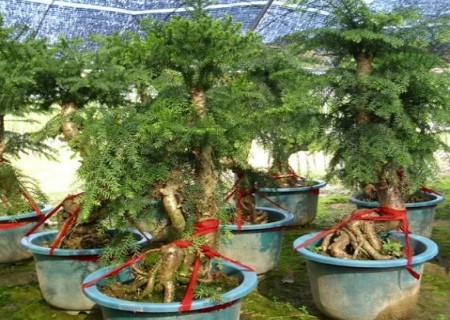
The Norfolk Island pine is one of the world's three major ornamental trees. The Norfolk Island pine is neither afraid of strong light nor unable to withstand low light. Its vitality is extremely tenacious. It likes moisture but also tolerates drought, and it stays evergreen year-round. As long as temperatures stay above zero, it can survive the winter. It also does not attract insects, and it is one of the masters of air purification, making it very suitable for long-term care in indoor spaces with insufficient light.
The Norfolk Island pine mainly reproduces by seed, but it can also be propagated by cuttings to produce new plants.
1. Seedlings grown from seeds are sturdy and strong, growing vigorously, and are suitable for mass propagation. Generally, from July to August, first scarify the seed coat of freshly collected seeds to promote germination, then sow the treated seeds in a sand bed, covering with fine sand about 1.5-2 cm. Under conditions of 25-28°C and a certain level of humidity, they will germinate in about 2-3 weeks, and they should be planted immediately after germination.
2. When taking cuttings, if the main axis or a leggy shoot is chosen as the cutting, it easily causes the plant's crown shape to become irregular, growing only horizontally and affecting its ornamental value. Cut the tip 2-3 nodes of a healthy, easy-to-root branch as the cutting, remove some leaves, soak it in clean water overnight, then insert it into a sand bed with coarse sand or vermiculite as the substrate. Maintain a temperature of 20-25°C and relatively high air humidity, and it will root in about 3 months.
In addition, the Norfolk Island pine can be propagated using the same offset division method as the sago palm (Cycas revoluta), and the timing is best in spring and summer.