Illustrated guide to the whole process of styling a literati tree bonsai, teaching you step by step
Literati trees often use vivid, distinctive, fresh and exquisitely skilled artistic imagery to give the best interpretation of the lofty, proud aspirations, the solitary elegance and the untrammeled, independent humanistic spiritual pursuit of Chinese intellectuals since ancient times; literati trees are more about expressing oneself, while Suren style is more about stating one's relationship with the world, placing oneself within the whole world. Therefore, in terms of the styling expression of bonsai, literati trees win with all kinds of elegant refinement, expounding how the tree form itself stretches and becomes clear and elegant, forming a posture of a Sumeru immortal; seen from afar, within the whole space, the bonsai is telling of itself.
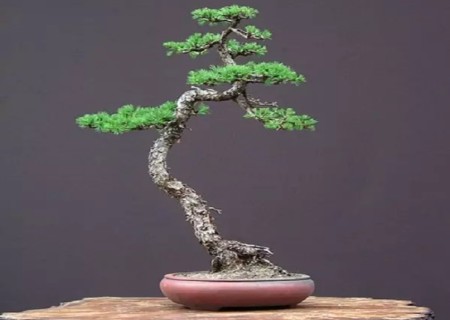
A literati tree is the three-dimensional embodiment of literati painting; it must convey an emotion and create an artistic conception. A good literati tree bonsai often contains a tragic quality, tearing apart something beautiful for people to see. The following is an illustrated guide to the styling process of a literati tree bonsai, for reference.
The following is the literati tree bonsai material that needs pruning:
Step one: first wrap the main trunk and branches with hemp cloth;
Step two: wind wire around the trunk and branches;
Step three: bend and tie the trunk and branches into the required shape;
Step four: remove part of the roots and soil;
Step five: use a bamboo stick to make the soil and roots combine tightly;
Step six: tie on wire to secure the tree.
After the preliminary processing is completed, it must be cultivated for a period before potting; after potting, appropriate pruning and maintenance management are still needed, along with further processing, to make its styling more perfect.
The above is the effect after two years of care.