Pear Grafted Seedling Management Methods and Technical Key Points
Transplanted grafted pear seedlings, due to the high density in the sowing nursery, often grow unevenly. It is best to divide and replant the successfully grafted semi-finished seedlings before spring budding in the second year, in order to expand the nutrient area of the young seedlings. At the same time, cutting the root system also solves the problem of the rootstock's main root being too long. After divided replanting, plant, manage and graft the dug-up seedlings separately according to whether they have successfully grafted or not, and whether they are thick and strong or thin and weak.
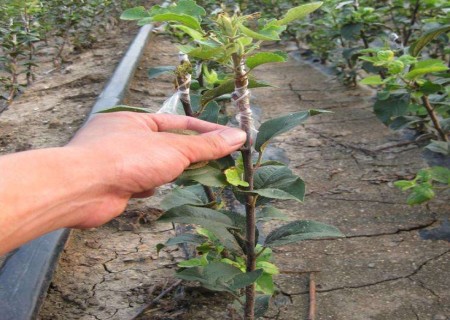
After planting, prune the rootstock of the surviving seedlings. As the grafted buds sprout and grow, promptly remove unwanted buds and root suckers, and insert support stakes. Also, in the early stage of rapid seedling growth from May to June, apply topdressing twice, each time applying 5 to 10 kg of urea per mu.
Doing a good job in managing bud-grafted fruit seedlings before they leave the nursery can improve the survival rate of grafted seedlings and the quality of the seedlings.
Check survival: Generally, branch grafting requires 20 to 30 days before it can be seen whether it has survived. If the grafted bud is moist and glossy, and the petiole falls off at a touch, it has survived; if the grafted bud turns yellow or black, and the petiole shrivels on the bud, it has not survived. For those that have not survived, if the rootstock can still be peeled, re-graft immediately. After successful grafting, select one upper bud with a better direction and position and robust growth for extended growth, and remove the rest.
Pruning the rootstock: For bud-grafted fruit trees, use the double pruning method to cut off the rootstock tip before the grafted bud sprouts. The first time, leave a 10 cm rootstock stub above the grafted bud as a support for the bud-grafted seedling, and later tie the bud-grafted seedling to it; the second time, when the bud-grafted seedling and rootstock have grown together as one, cut it off from the base.
Removing suckers: Pruning the rootstock after bud grafting will cause a large number of sprouts to emerge from the base of the rootstock, which should be removed promptly to avoid affecting the growth of the grafted seedling. Sucker removal needs to be done multiple times. When removing rootstock sprouts, do not bruise the grafted part or the grafted seedling.
Pinching: When the grafted bud of the grafted seedling grows to a certain height, pinch it to promote thickening growth. For pears, most pear varieties have low branching ability. In the past, pinching young shoots often produced only one secondary shoot that continued to extend without branching.
Fertilizing and watering: Apply topdressing 1 to 2 times in summer, using 10 kg to 15 kg of urea per mu dissolved in water for drenching; or dig a trench 6 cm from the roots and bury it in, then water promptly; or spray with a 0.3% to 0.5% urea water solution per mu. Fertilizer and water management: After pruning the rootstock in spring, fertilizer and water management should be strengthened promptly. When the seedlings are about thirty [cm] tall, or in combination with watering, apply 5 to 10 kg of urea per mu as topdressing.
Pest and disease control: When grafted buds sprout new shoots, they are often harmed by pests such as aphids and cutworms, so attention should be paid to chemical control.