Illustrated guide to bonsai grafting techniques, with a full breakdown of the steps
What is grafting? Grafting is taking part of one plant, such as a bud or a branch, and joining it onto the trunk or root of another plant so that the two parts heal together and grow into one complete plant. The bud or branch that is attached is called the scion (commonly known as the code), and the plant that receives the scion is called the rootstock (commonly known as the mother, stock, or foot wood). The rootstock mainly serves to absorb water and inorganic salts. The seedling obtained by grafting is called a grafted seedling.
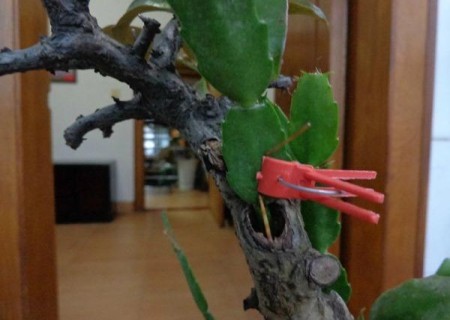
Grafting trees for bonsai is a styling method. Through grafting, you can not only obtain excellent bonsai tree material, but also speed up the time it takes for a bonsai to take shape, achieving twice the result with half the effort. Grafting methods can be used to add roots, add branches, and replace the crown, making the styling of a tree bonsai more complete. In the process of styling a tree bonsai, combining wiring, pruning, and grafting techniques will have the effect of adding the finishing touch.
To achieve a high survival rate, the main thing is to master the grafting technique well, and the cambium layers of the scion and rootstock must match and align and be tied tightly. The closer the genetic relationship between the scion and the rootstock, the easier it is to survive. Master the grafting time well; generally a temperature of 20——25 degrees c is most suitable, as the cambium cells are most active at this time and divide quickly, which is favorable for graft survival. The scion should be selected from excellent mother trees that are vigorous in growth, free of pests and diseases, have small leaves, and have strong compatibility, preferably nutrient branches with solid tissue.
Before grafting, tools should be prepared, such as a bud grafting knife, a cut grafting knife, a hand saw, a mallet, pruning shears, as well as plastic strips and hemp bark for tying. When grafting, try to meet the technical requirements of flat, accurate, fast, tight, and firm as much as possible; this can greatly increase the survival rate.
People in China have long liked to use grafting techniques to cultivate bonsai, with the aim of nothing more than improving the varieties of bonsai material. If this grafting method is used to improve the yield of fruit trees, or for flowers and landscaping, it is indeed beyond reproach and is a technique worth promoting. However, when used for bonsai, it still needs to be weighed and discussed, because using the wrong technique will leave an indelible mark forever.
Today I am sharing something purely practical, covering 12 grafting methods. Each method has an illustrated example and is accompanied by text explanations. It is highly actionable. An article like this must be saved for unexpected needs.
At present, bonsai material in China is still mainly based on collected mountain stumps and field-grown rough stumps, and these are mostly easy-to-grow traditional popular varieties. In order to improve variety diversity and mass-produce certain hot varieties, bonsai growers have used grafting to produce many new popular best-selling varieties, and this goal has been achieved.
However, from the standpoint of a buyer and enthusiast, is this kind of bonsai really worth collecting and enjoying as the growers claim? Let us analyze this key point. I often say that bonsai art originates from admiration of nature and is imitated from it; every naturally beautiful detail in nature is worth our study and imitation of its subtle changes, so bonsai most taboo having too many artificial traces. Grafting, however, is precisely an indelible scar, as if a big tree by the roadside had been carved with shapes and symbols by a naughty child; the artificial trace and the beauty of nature it expresses cannot be mentioned in the same breath.
First, let us understand what grafting technique is. Grafting can be divided into many techniques, such as stump insertion, T-budding, chip budding, and even air layering also falls within the scope of grafting techniques. Let us not discuss how to carry them out, because this chapter takes an opposing stance in looking at the various drawbacks at every level that bonsai faces in using this technique.
Everyone knows that the air layering method directly takes a branch from the mother tree, and after it survives, cuts it off and plants it. This method is aimed at some varieties that are difficult to root from cuttings and at propagating mature branches in order to flower and fruit earlier. At first hearing, it fits the requirements and goals of bonsai. However, apart from the variety and earlier flowering and fruiting meeting the requirements, the plant obtained by air layering seems to have no advantage that can be made into bonsai. If you insist on choosing this as material, the result can only be rough field cultivation, and after repeated sawing and regrowth, it will have a slightly rough form and can only be sold as a field-grown stump. After buying this kind of material and taking it home, apart from heavy chopping and sawing, there is also drilling and carving, and you will be enjoying it immensely. Add to that many years of old experience, and the finished work is still nothing more than a rotten tree covered in scars and holes. It takes a lot of people and effort, wastes time and energy, and the loss outweighs the gain!
Grafted stumps also have similar large scars, especially inserted stumps. Because branches are split open on the stump material and grafted in, there is a swollen scar on the stump. If it were only one or half a tree, it could still be treated as a weird rough seedling and played with as a strange stump, but almost all grafted material leaves this kind of indelible scar, so using this method for bonsai does not meet the public's requirements.
Many grafts place the graft point on the branches, that is, the stump has already been cultivated, perhaps a popular new variety from a certain family, and the tree is borrowed to bring it back to life. This kind of work is relatively more skillful than the stump grafting mentioned earlier, and it is not easy to detect, but it still has an indelible drawback. Because the same tree will have two different ecological appearances, for example, the leaves: the leaf shape on the graft eye and the leaf shape sprouting from the stump belong basically to different varieties. Although growers will regularly prune away the native branches and leaves on the grafted stump, it is still extra work. Moreover, after customers buy it, and if their technique is not up to standard, it will grow chaotically and lose shape after just two or three rounds.
Such a thankless method, on the basis of rough field cultivation, cannot produce a good work that meets the standard. Therefore, I personally suggest that it is best to abandon this technique in bonsai making; otherwise, it tires oneself and costs more than it gains!