Goldfish Plant (Nematanthus gregarius) Cutting Propagation Methods and Steps Explained
The goldfish plant has become quite a popular potted ornamental plant in recent years. Its leaves are emerald green and dripping with freshness, and its flowers are uniquely shaped, with a swollen belly that resembles little orange-red goldfish, exceptionally adorable. It is an excellent plant for both flowers and foliage.
I previously wrote an article about the goldfish plant, and gardening enthusiasts were all very interested. Taking advantage of the warm spring season, why not propagate one by cutting and give it to a good friend!
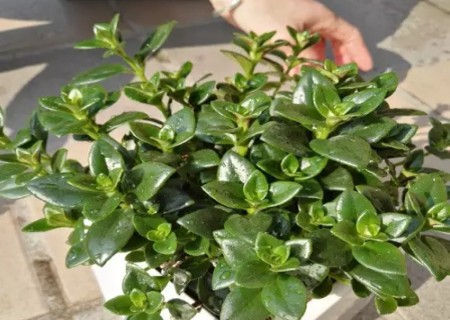
1. Timing: Goldfish plant cuttings can be taken year-round, but spring and autumn are the best seasons.
2. Cutting branches: Select one-year-old branches 10-15cm long, keep the top 4 leaves, and remove the basal leaves from the bottom of the branch.
3. Growing medium: Soil rich in humus, loose, and well-draining.
4. Temperature: Keep the temperature at around 20°C.
5. Inserting cuttings: Insert the cut branches about 2cm into the growing medium.
6. Transplanting: After one month, once the root system of the branches has developed well, they can be transplanted into pots.
Planting method:
To improve the survival rate, pay attention to the position of the flowering branches when planting, as this can enhance the ornamental value of the goldfish plant.
Select fresh branches with plump root systems, distribute them evenly in the potting soil, and fill the pot with soil to complete planting. Appropriate fertilizer can be added to the potting soil, and as the branches grow, they will trail down around the edges of the pot.
When the potted flowers are in full bloom, each plant will grow more than a dozen goldfish flowers. After new branches grow, they can be pinched back, which makes the plant shape more symmetrical and the growth more attractive.
Note that high temperature and humidity in summer can easily cause soft rot of stems and branches. Place the goldfish plant in a well-ventilated, shady spot. If soft rot occurs, promptly cut off the affected parts to prevent it from spreading!