What are the propagation methods for the goldfish plant?
The goldfish plant, as its name suggests, is a hanging plant that looks like a goldfish. Whenever it is in full bloom, its small red flowers look like goldfish leaping in the blue waves, especially magnificent. Such a wonderful potted plant is truly worth growing!
The goldfish plant is a fairly popular potted ornamental plant in recent years, with leaves that are dripping with emerald green, peculiar flower shapes and a swollen belly, resembling little orange-red goldfish, extremely adorable, and it is an excellent plant for both flowers and foliage. So, how is the goldfish plant propagated?
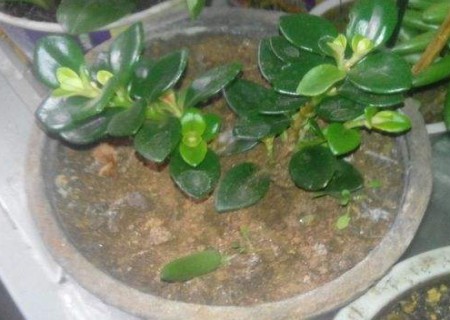
The goldfish plant can be propagated by three methods: seed sowing, division and cuttings. However, since the seeds of the goldfish plant are not easy to obtain, the sowing method is rarely used for propagation, and the cutting method is generally used.
Cutting propagation can use either tip cuttings or stem section cuttings. It can be done throughout the year, and is best done indoors after flowering. Cut one-year-old branches about 10-15cm long, keep 3-4 leaves, remove several pairs of small leaves at the base, and insert them into sandy soil. Cover well with glass or plastic film, keep the temperature at 20°C, and maintain relatively high air humidity; roots will develop in about 3 to 4 weeks. Two months after surviving, begin pinching to encourage more branching, which favors more flowers, and then it can be planted into pots. The seedlings do not bloom in the first year, and only in the second or third year do red flowers emerge from the leaf axils at the tips of the trailing branches.
The goldfish plant is propagated by cuttings. In spring and autumn, cut branches about 10 cm long with 3 to 4 nodes as cuttings, insert them into a cutting bed with coarse sand as the substrate, keep relatively high humidity, and at a temperature of around 20°C, they will root and survive easily.
Cutting propagation is further divided into tip cuttings and stem section cuttings. Cutting propagation of the goldfish plant can be done throughout the year, and is best done indoors after flowering. Cut one-year-old branches about 10-15cm long, keep 3-4 leaves, remove several pairs of small leaves at the base, and insert them into a cutting bed made of river sand or vermiculite, maintaining relatively high humidity and fairly stable temperature. Glass or plastic film can be used to cover the cuttings well, keep the temperature at around 20°C, and at the same time maintain relatively high air humidity; roots will develop in about 3 to 4 weeks.
After rooting and surviving, strengthen the care and management of the goldfish plant to promote the growth of new branches. Two months after surviving, begin pinching to encourage more branching, which favors more flowers. After 1-2 months, it can be planted into pots. The seedlings do not bloom in the first year, and only in the second or third year do orange-red flowers emerge from the leaf axils at the tips of the trailing branches.
When the flowers are in full bloom, the orange-red flowers are especially attractive. One flower after another hangs on the branches, paired with green leaves, as if little goldfish were playing among the aquatic plants.