How to Plant Coleus Seeds? Detailed Guide to Sowing and Seedling Raising
Coleus is a brightly colored foliage plant with many varieties and easy propagation, making it a widely used ornamental foliage flower. Besides being displayed as a small foliage plant, it can also be arranged in patterned flower beds and used as foliage accents in flower baskets and bouquets.
Indoor displays are mostly small to medium-sized potted plants. Choose light-colored cachepots with a smooth texture to set off the gorgeous leaf colors of coleus. To keep the plant shape beautiful, the unopened flower spikes are often cut off, and the plants are placed on low tables and windowsills for appreciation. For courtyard cultivation, it can be used in flower beds or as a plant border. Several pots of coleus can also be arranged in patterns to decorate meeting venues and theater foyers, creating a profusion of flowers.
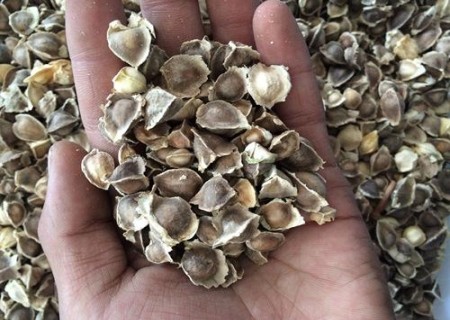
So how do you plant coleus seeds? Generally, seed propagation can maintain the superior traits of the variety. For some varieties whose traits cannot be maintained by seed propagation, cuttings propagation is needed.
1. Applicable Types
Seed propagation can maintain the superior traits of the variety. This type is suitable for the following 5 leaf-type varieties:
[Large-leaf type] Has large ovate leaves, tall plants, few branches, and an uneven leaf surface.
[Colorful-leaf type] Leaves are small, oblong, with pointed tips and a smooth surface. Leaf colors include red, orange-red, yellow-green, and green spots on a white background.
[Wavy-edge type] Leaf margins are lobed and wavy, with great variation in the lobes and waves, and many leaf colors.
[Willow-leaf type] Leaves are slender, willow-shaped, with irregular lobes and serrations along the margins.
[Yellow-green-leaf type] Leaves are small and yellow-green; plants are short and much branched.
Sowing is generally carried out in March. Mix fully decomposed humus soil and plain sandy soil in equal parts, blend evenly, and put the mixture into a seedling pot. Soak the seedling pot containing fine sandy soil in water until thoroughly wet, then sow according to the method for small seeds, cover with a thin layer of soil, cover with a glass plate or plastic film, and keep the potting soil moist. The suitable germination temperature is 25°C to 30°C, and germination occurs in about 10 days. After emergence, thin the seedlings 1 to 2 times, then transplant the seedlings into pots. The seedlings grown from seed vary in leaf color, and at this point the superior ones can be selected and the inferior ones discarded.
2. Seed Preparation
Coleus seeds are relatively expensive, so you can collect them yourself. Before flowering, select plants with bright colors to save seed. At flowering, hand-pollinate by dipping a brush in pollen and brushing it onto the stigma, then cover with a paper bag for isolation to prevent crossbreeding and degeneration. Before flowering, apply some phosphorus and potassium fertilizer to ensure the nutritional needs for seed setting, so the seeds produced are plump and have a high germination rate.
Generally, after flowering and fertilization, as long as there is sufficient sunlight and no pest or disease damage, coleus can set seed. About one month after seed setting, the seeds mature and can be harvested plant by plant, dried, and stored for sowing the following year.
Because coleus seeds are relatively small, they can be dried together with the pods when harvested. Seeds collected by yourself will show some degeneration and variation when sown the following year, so inferior seedlings should be eliminated from the seedling stage to ensure the seedlings are uniform and consistent.
3. Seed Propagation
Under conditions with a high-temperature greenhouse, pot sowing can be done in all four seasons, generally in March in a greenhouse.
Mix fully decomposed humus soil and plain sandy soil in equal parts, blend evenly, and put the mixture into a seedling pot. Soak the seedling pot containing fine sandy soil in water until thoroughly wet, then sow according to the method for small seeds, cover with a thin layer of soil, cover with a glass plate or plastic film, keep the potting soil moist, and provide water and care.
The suitable germination temperature is 25°C to 30°C, and germination occurs in about 10 days. After emergence, thin the seedlings 1 to 2 times, then transplant the seedlings into pots. The seedlings grown from seed vary in leaf color, and at this point the superior ones can be selected and the inferior ones discarded.
Seed propagation requires considerable labor for seed collection, takes a long time for sowing and seedling raising, and is also labor-intensive for potting up. In production, cuttings propagation is used more often.
The sowing soil is a mixture of 1 part peat soil and 1 part fine sand. Broadcast sowing is sufficient. Coleus seeds are light-loving seeds, so no soil cover is needed after sowing. The suitable germination temperature is 20-25°C. Keep the substrate moist, and germination occurs in 8-10 days. Cuttings can be taken in all four seasons, rooting in about 1 week at around 20°C, and water cuttings also root very easily.
Seedlings are potted up when they grow 1 pair of true leaves. The potting soil is 2 parts peat soil, 1 part loam, and 1 part river sand, with sufficient base fertilizer added. During the growing period, topdress frequently, including applying superphosphate and bone meal. Keep the temperature above 20°C. During the seedling stage, whether to pinch off the growing tip depends on the cultivation goal. To grow a plant with a full shape, the main stem should be pinched off to promote side branch growth. To grow a conical plant shape, the main stem does not need to be pinched off.