How to propagate honeysuckle by cuttings? Illustrated cutting methods and steps
Honeysuckle is one of the 38 precious Chinese medicinal herbs under key state management, with wide uses in medicine, health care, economic ecology and other aspects. The wide uses of honeysuckle have brought enormous economic benefits. With the successive development of various honeysuckle products, market demand has grown exponentially, but the price of honeysuckle has been climbing all the way.
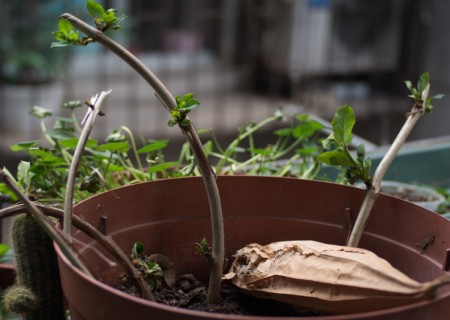
The propagation methods of honeysuckle include cuttings, seeds, root division and layering. But the simplest and most feasible method is cutting propagation, and cuttings are further divided into direct cuttings and cutting propagation for seedlings. Because direct cuttings occupy a large area, have a low survival rate and are unfavorable for seedling-stage management, cutting propagation for seedlings is mostly used for propagation. Below is an introduction to the cutting propagation technique for honeysuckle.
I. Materials for honeysuckle cuttings
1. Branches
Choose varieties that branch quickly and flower early, such as Fast-growing Honeysuckle No. 5, and select young branches that grow vigorously and are free of pests and diseases.
2. Substrate
The cutting substrate for seedlings should make full use of local resources, adapt to local conditions, and be selected for low cost, good aeration, water retention and heat preservation, while also being light in weight, so that seedlings take root easily and are easy to transport.
3. Container selection
Choosing a suitable seedling container can help seedlings form a well-balanced root system. The seedling stage of honeysuckle is relatively short, so depending on the situation, plastic nutrient cups that are small in volume, light in weight and convenient to transport and handle can be used.
4. Rooting hormone selection and preparation
Honeysuckle needs to be treated with plant rooting stimulants to treat the cuttings, promote rooting and increase the survival rate of cutting propagation. The rooting stimulants usually used include indolebutyric acid, indoleacetic acid, naphthaleneacetic acid, 2,4-D, ABT rooting powder, etc. One of them can be used alone or different concentrations can be mixed and prepared for use, but the rooting effect is not ideal. We use "Yuhualing" rooting agent for treatment, which can better solve this technical problem, with explosive root growth, as shown in the figure.
5. Fungicide selection
For the seedling area, quicklime is used for rough disinfection. For substrate disinfection, 2000-fold potassium permanganate is evenly sprayed. For disinfecting branches and seedlings, agents with strong efficacy, strong bactericidal power and little phytotoxicity should be selected. Commonly used ones include: chlorothalonil, carbendazim, thiophanate-methyl, etc. Various disinfectants should be used alternately.
II. Cutting methods for honeysuckle
1. Selecting cuttings
During the growing and flowering season, plants with pure variety, vigorous growth and plump flower buds should be marked as superior mother plants. In late autumn and early winter, select 1-2 year old branches from the selected mother plants as cuttings. They can also be collected in combination with summer pruning or winter pruning. After collection, cut them into 25-40 cm stem segments, tie them into bundles, place them upright indoors or in a cool place, cover them with wet straw bags for later use, or store them buried in soil until the following spring before cutting. Requirements for cuttings: short internodes, strong growth, and no pests or diseases.
2. Cutting treatment
The length of long-branch cuttings is 30-40 cm, and the length of short-branch cuttings is about 25 cm. The thickness of the cuttings is 0.5-1.5 cm. According to the length requirements, cut the lower end of the cutting at the stem node into a smooth slanted surface. Cut the upper end flat 1.5-2 cm above the node. Tie the prepared cuttings into 1 bundle of every 50 or 100 pieces, soak the lower ends in 500 ppm indolebutyric acid solution for 5-10 minutes, let them dry slightly, and then they can be inserted.
3. Cutting process
1) For long-branch cutting propagation, open furrows at a row spacing of 30 cm and a furrow depth of 25 cm, then place the cuttings in the furrows at a plant spacing of 20 cm, cover with soil and firm it down. This method can raise 11,000 seedlings per mu;
b) Short-branch cutting propagation is roughly the same as above, and the row and plant spacing can be reduced to 25 cm and 15 cm, raising 18,000 seedlings per mu. For both cutting methods, the insertion depth of the cuttings must reach more than 2/3 of the cutting length.
4. Seedling management
On the day of cutting or the next day, water thoroughly once. Keep the soil moist to promote sprouting, and wait until the following spring for transplanting.
III. Key points for honeysuckle cuttings
Honeysuckle can be propagated by cuttings in all four seasons, but the survival rate is somewhat higher for cuttings in spring and autumn. In recent years, as long as there are pruned branches, I use them for cuttings. The key points for cuttings are as follows:
1. Choose branches that are vigorous from the current year (easier to survive), straight (easy to insert and grow), and with slightly sparse leaf spacing (personal preference; I like slender and upright ones, not short and stunted ones);
2. Each cutting branch generally keeps two to three nodes, retaining only the two leaves on the upper node, and the other leaves are cut off;
3. Insert the prepared branch obliquely into the soil to a depth of 1/2 of the branch, and press it slightly firm;
4. After insertion, water thoroughly, then keep the soil moist, and place it in a ventilated place without direct sunlight. Roots can form after about half a month; after rooting, place it outdoors in time for normal management, and transplant as appropriate;
5. If cuttings are taken in spring, new buds will quickly emerge between the leaves, but roots have not yet formed, so management must not be relaxed at this time.
6. Some friends like to frequently pull out the inserted branches to look at them. If you find a lump on the lower part of the cutting branch (similar in appearance to a root nodule; although roots have not formed, such a branch has already survived.)