How to prune a crabapple bonsai? Master the right method
There is a kind of letting go called "if you fail to make a decisive cut, you will surely suffer the chaos." Growing flowers has always been "seven parts management, three parts pruning." For ornamental plants, all growth that does not take a "good figure" as its premise is hooliganism. Of course, this is not the old farmer being a looks-obsessed fanatic (well, only 1/2 a looks-obsessed fanatic), but the necessary path to keeping the plant on a healthy growth trend. After all, if you fail to be a good "scissorhands," you may soon become a "plant killer."
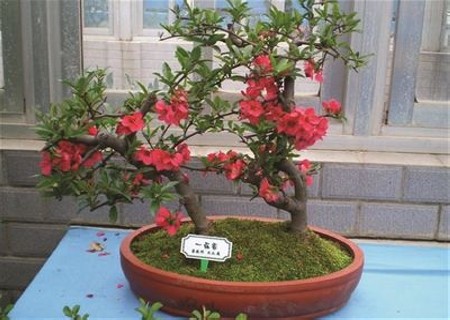
Spring is the earth's makeup artist, with a thousand charms and vivid life everywhere, and we are the beauticians and health specialists of the plants at home. Proper pruning can give them a graceful posture. What is more, only when nutrients are concentrated is it beneficial to the plant's healthy growth and flowering.
Crabapple flower buds mostly differentiate from terminal buds, and the main flowering branches are medium and short fruit branches, so medium and short fruit branches should be retained. Long branches should be shortened, and at the same time dense branches, dry dead branches, and diseased and pest-infested branches should be pruned away, then pruning should be done according to the desired tree shape. If you want a full crabapple canopy, then thin out the dense and keep the sparse, cutting away overly dense branches, while for areas with sparse branches, prune them downward so that they send out more side branches and fill the gaps.
When growing crabapple flowers, you must pay attention to pruning them. Proper pruning can make the crabapple's shape more beautiful and is also beneficial to its blooming. Below, let us look specifically at the pruning methods and precautions for crabapple flowers.
1. Spring pruning
In spring, crabapple flowers begin to push out new buds. This is when crabapple flowers need a large amount of nutrients, so the dead branches, weak branches, diseased and pest-infested branches, crossing branches, stacked branches, and overgrown branches should be cut away to promote the sprouting of new buds and the growth of new shoots. Note that according to the crabapple's shaping needs, some overly long branches and leaves should be cut to promote the production of side branches and increase the number of flowering branches, ensuring flowering the following year.
2. Pruning after the flowers fade
Different varieties of crabapple flowers have different growth periods. According to the different flowering periods of crabapple flowers, prune the branches and leaves two weeks after the flowers fade. Cut away crowded branches and protruding branches. Long branches can be shortened, keeping 3 to 4 buds from the base. This helps increase the short branches that form flower buds.
3. Pruning after leaf drop
After the crabapple flowers drop their leaves, for better growth the following year and to preserve nutrients in winter, just as in spring, cut away the crabapple's dead branches, weak branches, diseased and pest-infested branches, crossing branches, stacked branches, and overgrown branches. At the same time, pay attention to maintaining the crabapple's overall shape.
Precautions:
1. Be gentle when shortening
In the process of pruning crabapple flowers, when shortening flowering branches you must be gentle and proceed one by one, avoiding repeated pruning that would affect the number of flowers in the flowering season.
2. Leave branches according to space
Different plants have different shapes and occupy different amounts of space. We should decide how many branches to cut and how many to leave according to the size of the space.
3. Pruning after flowering
After the crabapple's flowering period has passed, leafy branches can be cut away, which can reduce the area of photosynthesis, thereby inhibiting the crabapple's growth and reducing nutrient consumption. When pruning, you must be gentle.
Early spring is never a one-act play for a single flower; a myriad of flowers bloom together, vying in splendor. With spring's soft, moist breath, they spread a leisurely fragrance through the damp air, involuntarily making one feel relaxed and joyful. Pruning a crabapple bonsai in moderation every year can help it maintain its tree shape and give a better ornamental effect.
In April in Longcheng, a hundred flowers bloom in brilliant colors, and the spring flower scenery reaches its climax. This is the most beautiful time for the scenery of every park. The crabapple flowers have bloomed! After enduring through a winter, it is time for the fragrant season. The magnolia flowers have already withered, riddled with holes, and at this time the peaches and plums are just about to bloom. Look at the crabapple flowers; in a pink world where one branch stands out alone, the full tree of red blooms arriving as promised is true prosperity.