How to Prune a Crabapple Bonsai: Methods and Techniques Explained
People love crabapple mostly for its ornamental value, achieving a reflection of taste and appreciation, which has further earned it the titles of “immortal among flowers,” “imperial consort of flowers,” and “noble one of flowers.” Its symbolic meaning is great, and to a large extent, placing crabapple flowers at home can highlight one's taste.
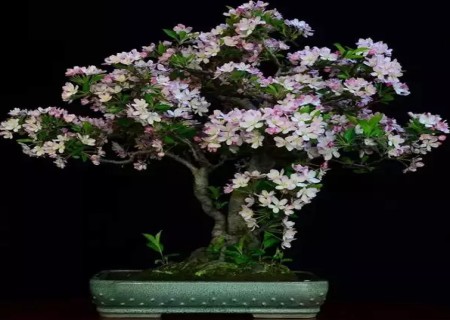
Crabapple flowers are elegant in posture and bloom in splendor. Since ancient times, they have been a famous flower appreciated by both refined and popular tastes. The crabapple tree has a graceful form, with brilliant flower colors in spring and abundant red fruits in autumn, delicate and lovely. It is a beautiful flowering and fruit-viewing tree species in landscaping and also an ideal bonsai material.
Crabapple has strong sprouting ability and grows fast, so attention must be paid to shaping and pruning. From leaf fall in winter to budding in spring, you can cut off dead branches, diseased and pest-infested branches, thin and weak branches, crossing branches, overlapping branches, overly dense branches, and other messy branches. After flowering in spring, according to the shaping needs, appropriately shorten overly long branches to promote lateral branch formation, increase the number of flower buds, and ensure abundant flowering the following year. In addition, after spring budding, you can remove excessive, overly dense, and poorly positioned buds.
Because the crabapple plant is relatively tall, it needs support from thin bamboo or similar materials to prop up the branches and prevent lodging. At the same time, every spring you need to repot, change the soil, and prune, cutting off weak branches, overlapping branches, and residual roots. For plants that have already bloomed for 2~3 years, overly tall plants should be cut back, leaving only 6~10 cm of the stem to let them regrow new branches.
Crabapple bonsai needs frequent pinching. Don't feel reluctant about the flower buds; keep removing the tips of each branch so it will continuously branch out and become ball-shaped, rather than growing into one long stretch, which is not only ugly with few flowers but also easy to break. Flowers that have already bloomed should also be pruned off in time.
If the leaves of the crabapple bonsai are too dense, you should also remove some. Poor ventilation easily leads to mold disease. With this method, I carefully grew one pot, full and lush, very proud of it, but that was just one pot, and afterward I never had the patience to do a second one.
Spring returns to the earth, crabapple flowers bloom, fragrant breezes blow in waves, refreshing the mind. Everything appears full of vitality. Although crabapple bonsai is beautiful, especially during the flowering season, spring is also the season of rapid growth for crabapple. A beautiful crabapple bonsai also needs its owner to prune and fertilize so it can bloom even more beautifully and take on an even more beautiful shape.