How to sow pot marigold? Detailed sowing method
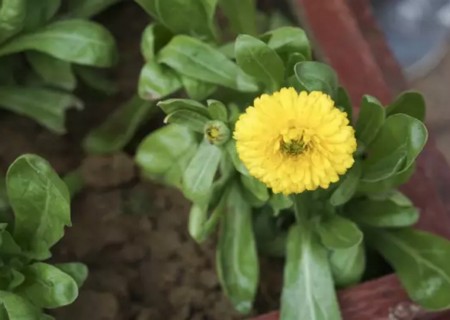
Pot marigold, also called calendula, has bright golden-yellow flowers that are very eye-catching. It is considered a sacred flower in the hearts of Indian people, often made into garlands worn around the neck, and these beautiful orange-yellow, golden flowers can be seen everywhere in flower markets in India.
Pot marigold is very cold-tolerant and tolerant of poor soil, and can bloom throughout winter until early spring. Compared with other flowers in winter, the golden yellow of calendula is the warmest and most cozy color in winter. Pot marigold is often used for festival flowerbed displays and is also suitable for pot cultivation; its beautiful blooms are deeply favored by people. So, how do you sow such a beautiful flower? Below, the editor will introduce the sowing method for potted pot marigold.
1. Soil selection
Because pot marigold is relatively tolerant of poor soil, it does not have high soil requirements. It can not only grow in dry soil, but also grow well in fertile, loose alkaline soil. Therefore, when sowing pot marigold, it is recommended to choose a fertile, loose, slightly acidic substrate.
2. Sowing time
Pot marigold can be sown in autumn. Of course, before sowing, the prepared substrate needs to be sterilized in advance. You can stir-fry it in a pot, which can kill insects and insect eggs.
3. Seed germination
Germination is a step that many plants need before sowing, and pot marigold is no exception. For sowing pot marigold, you can soak the seeds in warm water of over 20 degrees for 5-6 hours, until the seeds become relatively swollen.
4. Sowing process
After we have prepared the soil and the seeds have been germinated, we can sow. You can wear gloves and directly take the seeds by hand to broadcast them; for seeds that are too small and difficult to pick up by hand, you can dip a toothpick in water and use it to stick the seeds for sowing. After sowing, cover with soil about 1 cm deep, then use the pot immersion method to induce germination. The method is: gently place the flower pot with the sown seeds into water, with the water depth at half or two-thirds of the pot height, and let the water slowly soak up.
5. Post-sowing management
1) Heat preservation and moisture retention: Since we sow in autumn, cold waves will inevitably arrive. At this time, we can wrap the entire flower pot with plastic film, which is convenient for both heat preservation and moisture retention.
2) Appropriate light: When the seedlings break through the soil, we need to promptly remove the film previously used for heat preservation and moisture retention. At the same time, we need to give them appropriate light every day before 9:30 am or after 3:30 pm, otherwise the seedlings will grow very weak.
3) Thinning treatment: After the vast majority of seeds have sprouted, we need to promptly thin them. The method is: pull out the diseased, damaged, and weak seedlings so that the remaining seedlings get more ample growing space; when most seedlings have taken root and sprouted multiple leaves, we can transplant them into pots.