A Detailed Guide to Propagating Gloxinia by Cuttings
Gloxinia, also known as "falling snow mud", is a compact and delicate plant with lush green leaves and brilliantly colorful flowers. It has a wide variety of horticultural cultivars, including blue, white, red, and purple varieties, as well as double-flowered and bicolor types. It is an ideal potted flower for indoor containers, flower beds, holiday decoration, and interior adornment. Placing it on conference tables, in display windows, or in tea rooms adds even more to the festive joy.
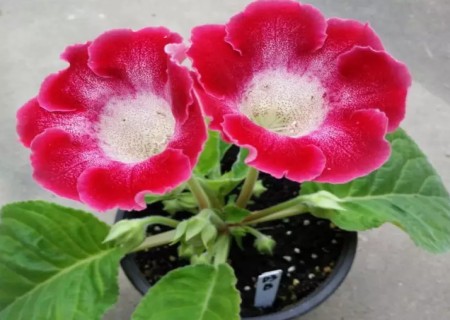
Propagating gloxinia by cuttings is the fastest of all propagation methods, but cuttings are further divided into three types: stem cuttings, leaf cuttings, and shoot cuttings. Each of the three methods has its advantages and disadvantages, and below we will introduce these three methods separately.
I. Stem Cuttings of Gloxinia
1. Choose a container with holes in the bottom to help with drainage and keep the soil loose and well-aerated.
2. When mixing the soil, choose fine sand or perlite; put peat moss in the lower part and perlite in the upper part.
3. Choose a shoot growing from the tuber that has 4 leaves, heat scissors over a flame, and cut the shoot off from the base.
4. Dig a small hole in the soil, place the shoot in it, and then cover it with soil. Be careful not to push it in forcefully, to avoid damaging the wound.
5. After planting, provide shade and avoid direct sunlight. Keep the surrounding temperature at 18°C—20°C, and it will sprout in about 15 days.
II. Leaf Cuttings of Gloxinia
1. After flowering, choose leaves from a vigorously growing, highly resistant plant, and take them from the base together with the petiole.
2. Cut off half of the leaf, insert the petiole diagonally into a substrate mixed of perlite and vermiculite, and leave two-thirds of the leaf surface exposed.
3. Cover it with glass, place it in a shady spot, and keep the surrounding temperature at 25°C and the humidity high. In about 20 days, small seedlings will grow, and then they can be moved into flower pots.
III. Shoot Cuttings of Gloxinia
1. This is generally done in spring when the new shoots have grown to 4—6 cm.
2. Break off the excess new shoots that have sprouted from the base, insert them into a sand bed, and maintain a certain level of humidity and temperature. After a period of cultivation, they will bloom in June or July of the following year.