How to root a Kalanchoe (kalanchoe) in water? Correct method and step-by-step guide
Propagating kalanchoe from cuttings is very simple; gardening friends only need to look at the pictures to learn it. This article follows a gardening friend through the process from pruning the kalanchoe, to treating the branches, to the cutting process, and basically covers all the various cutting methods for kalanchoe.
Water culture of kalanchoe falls into two situations: one is rooting in water and then planting in soil, and the other is keeping it in water continuously just like a water-cultured plant. Let us go through both of these.
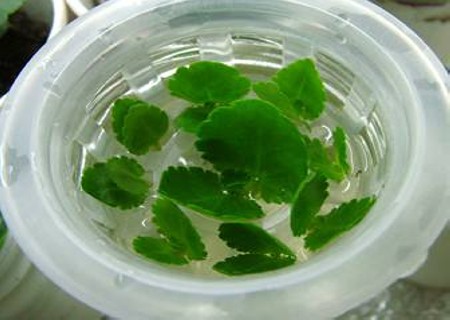
1. Rooting in water: this is still fairly simple, just take any branch and insert it into clean water, and in only a few days white roots will grow. If you want to transplant it, it is best to let the roots dry a little before planting, though rooting in water and then transplanting is a bit of a pointless extra step, because kalanchoe cuttings are very simple and the survival rate is very high even without rooting in water.
2. Water-cultured kalanchoe: this is also very simple, choose a branch with a relatively nice plant shape, then insert it into a water-culture bottle, generally changing the water once a week and rinsing the roots, and that is enough (of course, just topping up the water also works). Some gardening friends doubt it: is it really that simple? It really is that simple. Kalanchoe is inherently a very easy-to-care-for plant, and as for whether to later put some clay pebbles or such in the water-culture bottle, that is entirely up to individual creativity!
Cutting and water-culture propagation method/steps for kalanchoe:
1. Prepare the cuttings——the mother plant after the branches have been cut off. We can see that new branches are starting to emerge from both sides of the branch, so gardening friends should remember that if you cut branches yourself, you should cut about 1 cm above the axillary bud, as this helps the mother plant branch out. Let the cut naturally air-dry for 1 night or 1 day.
2. The cut branches need to be properly treated before cutting. Wash and disinfect the seedling box, etc., and fill it to 8 parts with cooled boiled water; drill insertion holes in the disinfected foam; use 2 drops of alcohol to dissolve a little rooting powder (because rooting powder does not dissolve easily in water); dip the end of the cutting in the rooting powder, then insert them separately into the holes to secure them, and all leaves should be above the foam;
3. Another branch was found for demonstration. We can see that from one branch we can cut several small sections, and each section will become a new kalanchoe plant. Each section must retain at least two nodes with leaves, then remove the leaves from the bottom node. Remember to make labels, and gently place them flat into the seedling box.
4. If cutting in winter, you can put on the transparent seedling box lid; in summer and autumn no lid is needed. Then move the seedling box to a bright place and wait for rooting.
As for the water used for water culture, it can be natural water; preferably natural water or mineral water that has been left standing for 1-2 days. The water should preferably submerge 1/3 of the roots, then place it in a ventilated and shady place, and avoid direct sunlight.
Of course, some gardening friends also ask whether water-cultured kalanchoe needs nutrient solution. Actually, a measured amount of nutrient solution can be added appropriately, and some gardening friends report that adding too much nutrient solution can easily cause root rot. Everyone can give it a try.