How to sow rosemary? Detailed sowing methods and steps
"Your smile fluttering in the wind has the scent of rosemary..." Many people have heard this song, right? As a plant with a fresh fragrance, rosemary is also very commonly found in various air fresheners and spices made from it on the market.
Rosemary has a cool, grassy scent and a sweet camphor aroma, slightly pungent. Since ancient times, it has been used to improve and strengthen memory. Even today, Greek students brew rosemary tea at home before exams, because its unique fragrance can inspire people to strive upward. So, how do you sow rosemary?
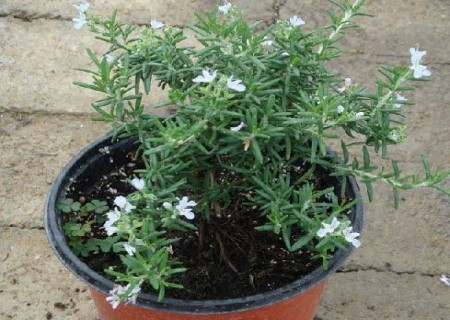
When rosemary is propagated by seed, germination is slow and the germination rate is low. According to literature records, if the germination temperature is between 20°C-24°C, the germination rate is below 30%, and the germination time is as long as 3-4 weeks. However, if germinated first at 20°C-24°C for 1 week and then treated at 4.4°C for 4 weeks, the germination rate can be increased to 70%.
Sow seeds in March-April or September, but the germination rate is relatively low and germination takes a long time. Rosemary seed propagation is generally carried out in early spring in a greenhouse for seedling raising. Both traditional soil seedling raising and plug tray seedling raising can be used.
1. Traditional soil seedling raising
For traditional soil seedling raising, the seedbed must first be prepared. The seedbed can be a flat bed or a small raised bed. The bed soil should be broken up and raked level, with sufficient fermented base fertilizer applied and sufficient bottom water watered. Broadcasting or drilling can both be used, but the seeds should be sown as thinly as possible, or mixed evenly with fine dry soil and sown on the seedbed, then lightly watered so that the seeds make full contact with the soil.
The seeds have a light requirement. Sow the seeds directly on the medium without covering. Build a small arched shed over the bed surface, which both ensures ground temperature and prevents the soil surface from easily crusting.
The seeds develop relying on the bottom water of the seedbed, but the soil surface must always be kept moist. Once the sprouts emerge from the soil, water again, following the principle of frequent light watering. The suitable temperature for seed germination is 15-20°C. Germination takes about 2-3 weeks. When the seedlings grow to about 10 cm, about 70 days, they can be planted out.
2. Plug tray seedling raising
For plug tray seedling raising, mix peat and vermiculite in a 3:1 ratio, and then sow. Cover with a thin layer of vermiculite and water thoroughly once. Build a small arched shed on top, and the subsequent management is the same as traditional soil seedling raising. The difference is that after rosemary seedlings emerge, the plug trays must be moved frequently to prevent roots from growing down through the holes at the bottom of the trays into the ground, which would damage the roots when planting out.
The germination rate of rosemary is very low, generally only 10%-20%. In the first year, rosemary grows extremely slowly. Even by autumn, the plants are not much larger than when they were just planted out. It takes 2-3 years to form a large yield, and the speed is very slow. Therefore, vegetative propagation is generally used in production. However, plants grown from seed have a more fragrant scent, so which propagation method to use depends on the need.