A Detailed Guide to Propagating Figs by Hardwood Cuttings
Figs grow vigorously, with large leaves and a graceful tree form, giving them high ornamental value, so they are often used in garden planting and as household potted plants. Figs can be propagated in many ways, including cuttings, division, and layering. By comparison, cuttings are the most convenient propagation method, and they can carry on the variety characteristics of the mother plant, with a very rapid propagation rate. Today, the editor will share with you the method of propagating figs by cuttings.
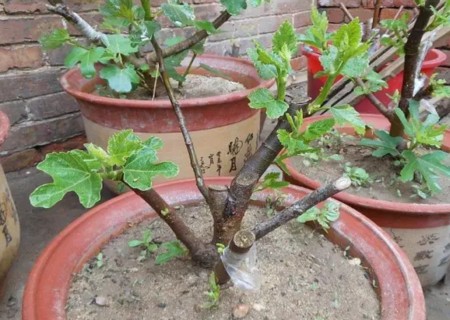
Figs can be propagated by cuttings, but cuttings are further divided into hardwood cuttings and softwood cuttings. In a previous article, the editor shared an article on fig cutting techniques with you; today, the editor will explain the technique of completing cuttings using hardwood.
1. Cutting time
Hardwood cuttings of figs are usually taken in spring, in March and April.
2. Cutting selection
It is recommended to cut one- or two-year-old cuttings, because such branches are more fully mature. It is recommended to cut the cuttings to a length of about 15 cm, and the branches should have 2-3 plump buds.
3. Cutting preparation
When cutting the cuttings, cut the upper end of the branch into a flat cut about 1 cm from the bud, and cut the lower end of the branch into a 45-degree angled cut. The angled cut can increase the contact area between the rooting part of the cutting and the soil, which is more conducive to root sprouting.
4. Cutting treatment
In order to promote rapid root sprouting of the cuttings and improve the rooting rate, before inserting the cuttings it is recommended to soak them in clean water for half a day to one day. The length of soaking time needs to be determined according to the degree of dehydration of the cuttings. If the cut surface is bright green, it indicates less dehydration, and the soaking time can be shortened; if the cut surface turns white, it indicates the branch is too dehydrated, and the soaking time needs to be lengthened.
After the branches have been properly soaked in water, soak the base of the cuttings in rooting water for 3 minutes, with a soaking depth of 2-4 cm. Afterward, remove the cuttings and set them aside to dry before later use.
5. Key points of cutting
For potted fig cuttings, the rooting medium should preferably be yellow sand or virgin soil, and make sure the soil remains moist. Insert the branch to a depth of about one third of the length of the cutting, and remember to water once after inserting the branch.
6. Care and management
Because fig seedlings have very weak cold resistance, before the cold winter arrives, measures must be taken to protect them from the cold and keep them warm, so as to avoid freezing damage to the young plants. The simplest method is to cover the cutting bed with a layer of leaves or dry straw, and after the cold has passed and the plants have survived, remove the covering.
Figs do not have a large demand for fertilizer, but in order to promote rapid plant growth, some nutrients can be appropriately supplemented. After the young plants enter normal growth, a low-concentration compound fertilizer solution mainly based on nitrogen fertilizer can be sprayed on them each month. The amount of topdressing should be properly controlled according to the growth condition of the seedlings.