Illustrated Guide to the Simplest Method for Rose Cuttings
Many friends are troubled by rose cuttings that fail to root or have a low survival rate. Below, the editor combines their own practical experience to share the method for rooting rose cuttings with everyone. While I dare not claim a 100% survival rate, relatively speaking the survival rate is quite high, and the operation is extremely easy to pick up. To help everyone understand, the editor has made illustrations for the cutting process. I hope the content shared today will be of some help to everyone. If there is anything inappropriate, please point it out. Welcome to the Chinese Bonsai Art Network to exchange experience and insights.
1. Selecting the Cutting
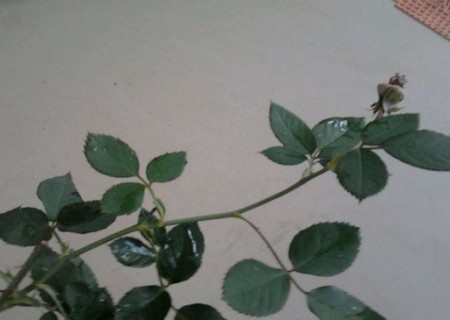
The first thing we need to do is choose a good branch as the cutting. It is recommended to select branches that have just finished flowering and have not yet sprouted new buds as cuttings, because such branches have relatively sufficient nutrient content, which is more conducive to survival after cutting.
2. Trimming the Cutting
Use scissors or another cutting tool to cut off the selected branch. It is recommended to use a sharp tool and cut the branch off cleanly in one stroke. If the tool is relatively dull, the cut branch will easily have frayed edges, and we will need to do a second treatment to clean up these frayed edges to ensure the cut is smooth and flat.
3. Trimming Branches and Leaves
After the wound on the cutting is treated, we need to cut off the leaves on the base end of the cutting, and we also need to cut the two leaves at the top in half.
4. The Cutting Process
Gently insert the prepared cutting into the perlite substrate in the flower pot prepared in advance. Of course, in addition to perlite, you can also use washed clean coarse sand as the cutting substrate. After cutting is complete, place the flower pot in a cool, ventilated place.
5. Bagging the Flower Pot
Before completing the final step, we need to take a thin plastic bag and cover the entire flower pot with it, which can reduce water evaporation inside the pot. But the opening at the bottom of the plastic bag must not be tied up, so that air exchange between the inside of the pot and the outside can be maintained, achieving a breathable effect.
This is what the editor has gained from experience with cuttings in recent years. Now applying this method to roses, the method is simple and the survival rate is very high, making it a method worth promoting. Friends who like this method may as well try it themselves and see how the results turn out!