How to Divide Asparagus Fern: Detailed Correct Methods and Steps
Asparagus fern is an ornamental plant grown as a potted plant in many homes. If you happen to have a well-growing asparagus fern at home and want to cultivate more potted asparagus ferns, division is the best propagation method. But division also carries some risks. To complete the division safely and smoothly, we need to carefully handle every detail.
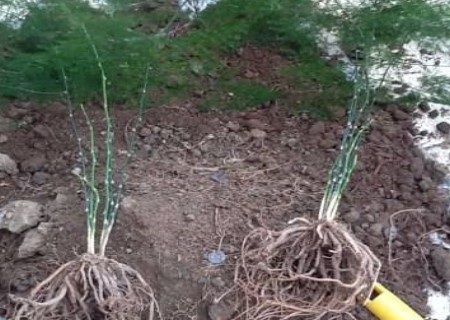
For dividing asparagus fern, it is suitable to choose 1-2 year old plants, and the division should be done between March and May, and it needs to be carried out at a suitable temperature. If the temperature is too high, it will affect the success rate of division.
So, how do you divide asparagus fern? Below, the editor will introduce the steps for dividing asparagus fern:
1. Selecting the mother plant
To increase the success rate of division, we first need to choose a healthy, robustly growing mother plant, and before dividing, we need to water it thoroughly 1 day in advance.
2. Removing the mother plant from the pot
Take the mother plant out of the flower pot, gently shake off the soil from the roots, then place it on a pre-prepared wooden board to await division.
3. Key points of division
Normally, one mother plant can be divided into 2-3 small plantlets; when dividing the mother plant, use a sharp knife, and make clean, decisive cuts to keep the cut surface smooth and free of fibrous roots; make sure the roots of each divided plantlet carry some of the old soil.
4. Transplanting into pots
After the division of asparagus fern is complete, apply some plant ash to the cuts to keep the wounds dry and also achieve a disinfecting effect, then plant them into flower pots and water thoroughly once more.
5. Care and management
After each divided plantlet has been transplanted, move them to a semi-shaded place for care. With proper management, they will usually sprout new roots and new leaves after 1 month. After that, you can appropriately prune branches, retain branches, and shape the plant according to its growth condition.