The Correct Way to Sow Air Plant Seeds
The air plant (Tillandsia) is as elegant in appearance as its name suggests, and the entire plant is exposed to the air, resembling a pineapple, which is how it got its name. Its uniqueness lies in the fact that this plant survives and grows entirely in the air, and does not rely on roots to absorb nutrients and water, but instead achieves respiration and absorption through its leaves, thereby ensuring the plant's normal growth.
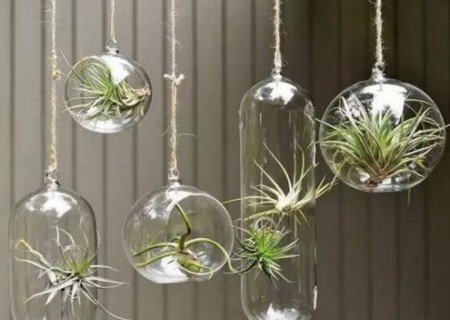
Keeping air plants indoors not only adds a sense of mystery to the interior, but also decorates the indoor environment and purifies indoor air. So, how do you sow such an elegant plant from seed? Don't rush - today we'll walk you through the sowing steps in detail with illustrations.
1. Prepare materials
Before sowing, you first need to prepare the sowing materials, mainly air plant seeds, dried sphagnum moss, and a glass container with no holes in the bottom.
2. Lay the moss
Take the prepared dry sphagnum moss out of its packaging bag, then spread it into the glass container. Note that at this point you should not add water for soaking yet.
3. Sow the seeds evenly
Take out the air plant seeds, then separate the seeds that are stuck together, and next scatter these seeds evenly over the dry sphagnum moss inside the glass container.
4. Add water for soaking
It is recommended to add water to the container by spraying, so that the seeds will sink into the sphagnum moss along with the water flow, until the amount added is enough to submerge the sphagnum moss to about half its depth. Then put a lid on the glass container, which ensures the seeds have enough humidity and suitable conditions to sprout.
5. Temperature regulation
Since sowing air plants has relatively high temperature requirements, it is recommended to keep the daytime temperature between 25-29°C and the nighttime temperature between 13-16°C. Of course, there are many ways to regulate temperature, which will not be covered here.
6. Humidity regulation
If you are cultivating the seeds indoors, you need to put a lid on the glass container, but leave an air hole to avoid a complete seal, then place the glass container in a spot where it can receive light for care. In the early stage of sowing, you need to ensure the humidity inside the container reaches 90%; once the seeds begin to germinate, the humidity should be kept at 50%-60%.
7. Watering and misting
During the care period, watering the seeds requires some skill, and you should avoid heavy watering. You can replenish water by misting, which replenishes the seeds' water while also creating humidity suitable for seed germination.
8. Germination and growth
After the above steps, you can see the seeds sprout in about 1 month. At this point they still need to grow in the glass container, and only after the young plant's tender leaves appear in pairs should they be transplanted elsewhere for care and management.