What are the propagation methods for air plants?
Air plants can be grown without soil, surviving entirely on air; moreover, this plant does not have the same absorptive root system as other plants, and it mainly absorbs water and nutrients through the stomata on its leaves. Even so, air plants also have a strong air-purifying ability, not only adsorbing substances such as formaldehyde, benzene compounds and carbon dioxide, but it is also the only plant currently known that can grow simply by breathing air. How amazing is that!
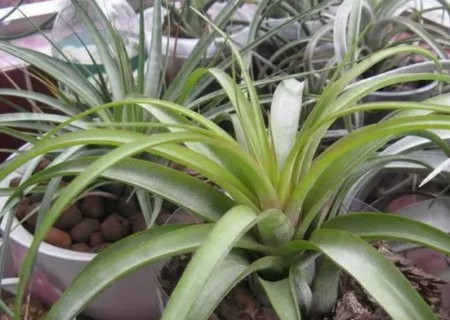
Air plants have a slender, lean framework, yet they are full of tropical flair. Paired with an exquisite planter, they are sure to create a unique charm for indoor spaces. Moreover, this plant is relatively clean and very easy to care for, making it very suitable for people living at a fast pace in modern cities, and it has now become one of the most popular and fashionable indoor plants in the world of greenery. So, how do air plants propagate?
Air plants mostly use two methods to propagate young plants: sowing seeds and dividing offsets. Below, the editor will briefly explain these two propagation methods.
1. Seed sowing propagation method
The practice of using sowing to propagate young air plants is mostly used in nurseries, and this method is suitable for large-scale production. However, to obtain air plant seeds, the plant needs to be pollinated, and with self-pollination, it is not the case that every pollination successfully produces air plant seeds, so this also involves a certain element of luck.
If cross-pollination between different plants is used, the success rate will naturally increase a great deal. But before and after pollination, water must never touch the stamens and pistils, otherwise the seed-setting rate will be greatly reduced. After successful pollination, it generally takes 4 months before the seed pods can be seen, and during this period no other operations should be done; one simply needs to wait patiently. It takes about 1 year for the grains to mature into seeds before they can be harvested.
After collecting the seeds, the next thing to do is sow them. Sowing is mostly carried out from March to November each year, with spring and autumn being the most suitable. Next, you need to prepare a moist but non-waterlogged growing environment for the seeds, with a temperature not lower than 20°C, while also providing the seeds with ample indirect light. Generally, the seeds will germinate after about 1 week of enclosed cultivation.
After the seeds sprout, timely management of seedling cultivation is needed. When the humidity of the seedbed is insufficient, misting should be done promptly, while ensuring continued exposure to indirect light. During this period, temperature control is also needed, ensuring the temperature does not exceed 30°C, and not lower than 10°C in winter. After about 1 year, the seedlings will be ready.
2. Offset division propagation method
Compared with the seed sowing propagation method, division is more suitable for ordinary home potting enthusiasts. An individual air plant will only have one chance to bloom in its lifetime, and after the flowers fade, it will transform through cell division into offsets that continue to grow, and this can continue for a very long time. Therefore, everyone should carefully maintain and manage them, and the surprises you harvest will be continuous.
Usually, offsets divided and planted in the same year can bloom with brilliant flowers that same year if maintenance and management are done well. However, it should be pointed out that division is itself asexual reproduction, which can be called a cloning technique. It can increase the propagation coefficient and also maintain the characteristics of the mother plant, so the phenomenon of variety homogenization is very common. The disadvantage of division is that plants obtained by long-term use of this method are unfavorable in terms of stress resistance, external form, flowering quality and management operations.
After division, the young plants need about one month of quiet recovery. During this period, it is recommended to spray water 1-2 times per week. Once the roots show signs of activity, they can be potted and planted. After the plants have been potted, simply follow the normal care and management measures for air plants.