How to divide a Golden Spider Plant? A detailed guide to the division propagation method
The Golden Spider Plant is a variety in the spider plant family that is relatively ornamental and has a strong air-purifying ability. Many people like to place a few pots of Golden Spider Plants indoors in a new home, especially right after the house has been renovated, to purify the air. This plays a very important role in purifying the air and keeping the indoor air smooth and fresh.
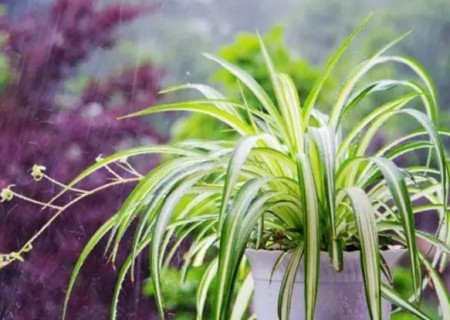
Like other varieties of spider plant, the Golden Spider Plant mostly has plump, fleshy roots with a strong water-storage capacity, so it has a certain degree of drought tolerance. For propagation, division is mostly used. The small young plantlets at the front end of the often long flower stalks absorb water from the air through their aerial roots. When division is needed, we can cut these plantlets off together with their aerial roots, then plant them in pots to grow.
In addition, old soil-grown plants can also be divided. When carrying out the division operation, first take the old Golden Spider Plant out of the flower pot, then wash off the soil clinging to the roots, and at the same time cut off the small, old, weak fibrous roots and the decayed root system. Cut the old roots apart together with the plant, and it can then be potted and planted. But when cutting and dividing, you need to make sure that each separated plant has more than 3 stems, and then transplant and grow them separately.
Of course, young plants obtained through division can also be grown hydroponically. However, hydroponic propagation generally requires changing the clean water 1-2 times a week, which is slightly more troublesome than soil culture. When growing hydroponically, make sure that one-third to two-thirds of the young plant's aerial roots are submerged below the water surface, and the other one ten-thousandth or two-thirds portion is exposed above the water surface of the container, so that the aerial roots can not only obtain a small amount of oxygen from below the water surface but also obtain more oxygen through the space above the water surface to promote root respiration.
Hydroponic or water-grown Golden Spider Plants also have an advantage that soil culture cannot match: on the one hand, they can reduce or even eliminate the harm of pests and diseases, and you can also admire the plump, pure white root system.