Detailed Guide to Propagating Variegated Spider Plant: Even Beginners Can Learn Easily
Variegated spider plant is an evergreen herbaceous plant that grows in clumps, with short, fleshy rhizomes that mostly grow in a slanting or horizontal manner. This variety has yellow-white longitudinal stripes in the middle of its leaves, and white stolons often grow from the leaf axils, curving and hanging downward, with young plantlets bearing aerial roots usually growing at the ends of the stems, which can be cut off for separate planting.
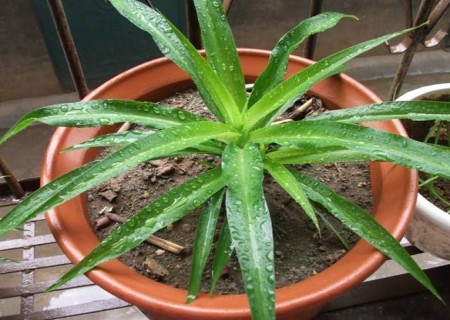
The benefits of variegated spider plant are self-evident, but how does this plant propagate? Variegated spider plant is mostly propagated by division, which can be done together with repotting. Generally around March in spring, young plants can be separated from the clustered parent plant and then cultivated. Alternatively, young plantlets on the stolon branches can be cut off for cultivation, and they are also very easy to keep alive.
In addition to propagation by division, we sometimes also use cuttings to cultivate new plants. Cutting is best done during the plant's growing season, usually by cutting off the young plantlets with intact roots at the ends of the stolons and then planting them in pots. The method is particularly simple, and with just a little care afterward, they can be grown very well.
However, whether propagating by division or by cutting, the newly planted young plants should not receive too much light, and in particular, direct strong light should be avoided to prevent it from affecting the plants' survival. It is recommended to place them in a semi-shaded and ventilated spot, and only after the new plants have developed a certain root system and resumed normal growth can they be transferred to the regular care and management routine.
Spider plant is a plant with relatively strong vitality and is mostly propagated by division and cutting; only rarely can the seed-sowing method also be used to cultivate young plants. If propagated by sowing, no special care is needed in terms of maintenance and management, but to grow them into adult plants of ornamental size often takes a considerable amount of time, so propagation by sowing is generally not used.