Detailed Explanation of Key Points of Red Tip Photinia Cutting Propagation Techniques
Red Tip Photinia is the collective name for hybrid varieties of the Photinia genus in the Rosaceae family. Its leaf color changes accordingly with the new and old degree of leaf growth, and it has very high ornamental value. Especially in spring and autumn, the new shoots and tender leaves that the plant sprouts are fiery red and incomparably bright, and it is often used for garden landscaping, but it can also be grown as a potted plant.
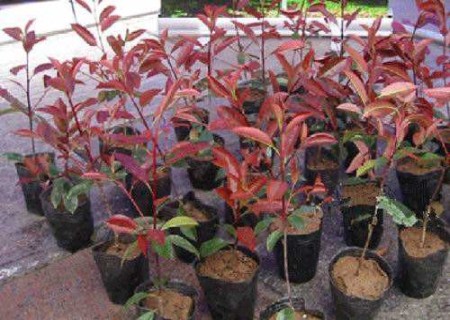
Red Tip Photinia grows very rapidly in an environment with sufficient water and nutrient supply, especially during the seedling growth period. Moreover, this plant has strong adaptability to the growing environment, can tolerate low temperatures, drought, poor soil, and pruning, and also has very strong sprouting ability, especially in terms of budding, which many plants cannot match. Therefore, Red Tip Photinia can be shaped into a low shrub through pruning for potted cultivation.
For home potted cultivation, Red Tip Photinia propagation requires a simple process, is convenient to operate, and has a high survival rate, so it is recommended to use the cutting method for propagation. Today, the editor will explain the cutting propagation method of Red Tip Photinia for everyone.
1. Seedbed selection
The culture soil used to make the seedbed should be loose, fertile, and well-drained. At the same time, an appropriate amount of decomposed farmyard manure should be added as base fertilizer and mixed evenly with the culture soil. If conditions permit, some aged chaff ash can also be added, which can increase the soil's water permeability and air permeability. It is recommended to use sandy and slightly acidic soil, so that the leaf color of the Red Tip Photinia plants cultivated will be more vivid.
2. Cutting selection
When selecting Red Tip Photinia, it is recommended to choose branches that grow robustly and have plump terminal buds as cuttings, cut them to a length of about 5-8 cm, and ensure that the cuttings have more than 1 terminal bud and leaf. Other excess terminal buds and leaves can all be removed.
3. Cutting and trimming
It is recommended to use sterilized special scissors for the operation. The wounds made on the cuttings in this way are smaller than those caused by ordinary scissors, and the phloem part of the branch faces inward while the xylem part is concave toward the center, making it easier to form wound healing tissue, promote rooting, and improve the survival rate of cuttings.
4. Cutting treatment
Prepare a rooting solution, then place the trimmed cuttings in the rooting solution to soak for a few seconds before cutting. Usually, soaking the end of the cutting that needs to be inserted for 3-5 seconds is enough. Never let the soaking time be too long, otherwise the effect will be counterproductive.
5. Cutting process
For Red Tip Photinia cuttings, it is recommended to cut and insert immediately, shortening the time from cutting the branch to inserting it as much as possible. During cutting, note that the density should not be too high, ensuring that the leaves do not cross or overlap. The cutting spacing is mostly kept at 5-6 cm; the cutting depth is preferably kept at about 4-6 cm; the branch above the soil must be ensured to have more than 1 terminal bud and leaf; during cutting, ensure that the branch and soil are in close contact with no gaps.
6. Care and management
The temperature and humidity of the seedbed are the most critical factors determining whether the cuttings succeed. The temperature should preferably be kept between 25-28°C, the soil humidity should be kept at about 60%, and the air humidity should be kept above 95%. Therefore, the care and management measures in this process must be carried out properly, especially in controlling temperature and humidity. As long as care and management are proper, the plants can be seen to have survived in about 1 month.
In addition to temperature and humidity, after the seedlings root, light should also be gradually increased and nutrients supplemented. It is advisable to spray foliar fertilizer or apply diluted water-soluble chemical fertilizer. Of course, in addition to light, temperature, water, and fertilizer, pest and disease prevention and control treatment also needs to be done well.
Notes:
Red Tip Photinia cuttings require mastering certain techniques, among which temperature control is crucial. The most suitable cutting temperature is about 25°C. If the soil temperature is higher than the air temperature, then the cuttings root faster than they sprout; if the soil temperature is lower than the air temperature, then the cuttings root more slowly than they sprout, but this is very unfavorable for the survival of the cutting seedlings. Therefore, we should strictly control the temperature and maintain the optimal temperature to improve the survival rate of cuttings.