How to prune a black bone tea bonsai? A full analysis of methods and techniques
Because of its high ornamental value and ease of care, black bone tea has won the affection of more and more bonsai enthusiasts in recent years, but since artificial cultivation is relatively limited and wild stump resources are also very scarce, the price has remained persistently high, and the occasional wild stump with a good shape and a long tree age that appears on the market is quickly snapped up.
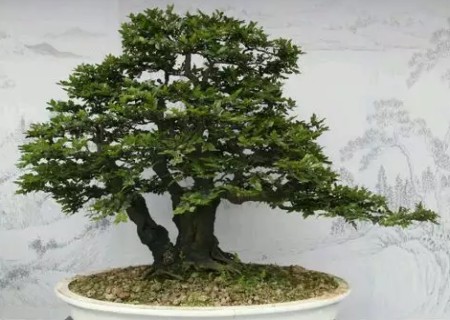
Black bone tea gets its name from its fine green leaves and black trunk, but it is especially beautiful when it buds every spring. To keep it in good shape, it can be pruned 1-2 times each year. Unique shaping and pruning often give a black bone tea bonsai plenty of charm, so how do you prune a black bone tea bonsai?
Black bone tea bonsai is mainly grown for its foliage and stays evergreen all year round, and it goes through a shoot-flushing process once every season, so it can be pruned in any of the four seasons, but each pruning should only be done after the new shoots have become mature. However, it is best to prune in spring and autumn.
Black bone tea has a certain tolerance for pruning. Proper pruning is very important for shoot flushing and shaping, and light pruning will not cause branch loss. Single-branch pruning can also be done. After budding each season, keep the strong healthy buds and remove the excess buds as appropriate, because if this is not done and these new buds are simply left to grow, it is very difficult to meet the requirement for horizontally spreading branches, and as a bonsai, the requirement for horizontally spreading branches is essential, otherwise it will largely lose its ornamental significance.
At the shaping stage, around Qingming, the whole plant can be heavily pruned, defoliated, and even have its roots pruned. Because this tree species grows relatively slowly, a combination of pruning and wiring can be used to speed up the formation of the work. Of course, the terminal buds should also be removed at the right time to encourage the stump to sprout side buds until the tree shape becomes full. After a black bone tea bonsai work has taken shape, in order to keep it from deforming and losing its form, in addition to proper control of water and fertilizer, it is also necessary to promptly remove messy young shoots.