Detailed Guide to Sowing Evening Primrose Seeds, Easy for Beginners to Master
Evening primrose can be grown into seedlings by sowing seeds, and it has fairly strong reproductive ability. In northern regions it is mostly sown in spring, while some other places are also suitable for sowing and propagating in autumn. So, how do you sow evening primrose? Today, the editor will explain this plant's sowing method for everyone.
1. Substrate disinfection
Before sowing, we need to disinfect the culture substrate. It is recommended to place the selected soil in a sand pot and stir-fry it. This can not only achieve a sterilizing effect, but also eliminate harmful substances such as insect eggs.
2. Soaking seeds in warm water
After treating the culture medium, we also need to soak the seeds. Usually, the seeds can be soaked in warm water for about 3-10 hours, until the seeds swell.
3. Sowing process
Because this kind of flower seed is relatively small, it is generally difficult to pick it up directly with your fingers for sowing. We can use a toothpick as an aid. The method is: dip one end of the toothpick in water, then use the moistened part to pick up the seeds, and then sow them on the surface of the substrate. Next, cover with a layer of culture soil about 1 cm thick.
4. Bottom watering to replenish moisture
For replenishing water to the seeds, it is not recommended to use the watering method, but in order to achieve the purpose of watering, we can do it by bottom watering. Place the flower pot with the sown seeds into water of a certain depth, and then the water will slowly soak up through the flower pot until the potting soil becomes moist.
5. Key management points
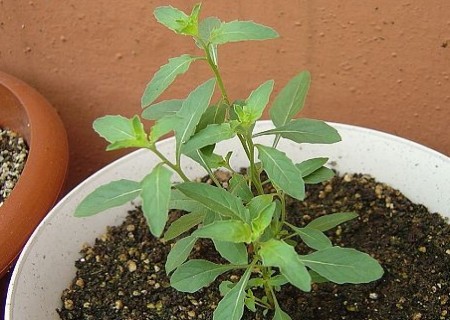
If sowing in autumn, when the temperature drops suddenly, it is recommended to wrap the flower pot with plastic film to achieve the purpose of heat preservation and moisture retention; after the seeds sprout and the seedlings break through the soil, in order to promote ventilation and air flow, the plastic film should be removed in time, and the seedlings should receive a certain amount of light in the morning and evening every day, so as to ensure that the seedlings can grow robustly.
After most of the seeds have emerged, thinning should be carried out in time. Diseased and weak seedlings need to be pulled out. At the same time, in order to ensure that all seedlings can have enough growing space, some seedlings should also be properly pulled out from areas where they are growing too densely. After most of the seedlings have spread out more than 3 leaves, they can be transplanted into pots.