How to propagate potted kumquat by cuttings? Teach you the correct method
Kumquat, native to southern China, is mostly grown in pots for display. It generally begins blooming in early summer and its fruit ripens in late autumn. It is a potted fruit tree that combines flower and fruit appreciation. Potted kumquat has high ornamental value, especially during the flowering and fruiting period. So how is this fruit tree propagated in pots?
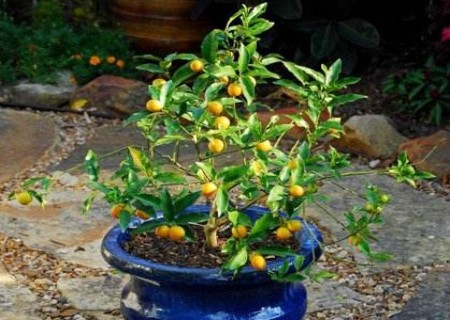
Generally, potted kumquat can be propagated by cuttings and grafting. Below, the editor will explain from the perspective of cuttings.
Cuttings are one of the most common methods used in the propagation of many potted flowering plants, and they are simple and easy to perform.
1. Cutting time
For kumquat cutting propagation, it is best to choose spring and summer, generally 4-6 months is more suitable for cuttings, because during this period the temperature environment is generally above 20°C, and there is no scorching sun of midsummer, so it is more suitable for the survival and growth of cutting seedlings.
2. Making cuttings
First select robust branches from the mother plant, cut them off, and then cut them into cuttings about 7-10 cm long. Keep 1-2 leaf stalks on each cutting, and keep only a small half of the leaf on each leaf stalk, cutting off the rest of the leaf. After cutting the cuttings, the upper end of each cutting must be sealed with wax to avoid water loss through evaporation.
3. Cutting process
Choose a clay pot of moderate size and good air permeability as the cutting pot, fill the pot with sterilized soft sandy loam soil, and then insert the prepared cuttings into the nutrient soil. If cuttings are taken during April-May, the inserted part should account for about 60% of the entire branch length, after which they should be maintained under semi-shade conditions; if cuttings are taken in June, the inserted part should account for about 40% of the entire branch length, after which they should be maintained in a fully shaded environment. At the same time, in order to improve the survival rate of cutting seedlings, it is recommended to insert while cutting.
4. Covering with film
After all cuttings are inserted, water them thoroughly once, and then cover the pot opening with transparent plastic film. The purpose of this is to prevent rain from washing them while also defending against pathogen invasion. More importantly, it can keep the cuttings at a certain humidity so they will not die from lack of water.
5. Maintenance management
From the completion of cutting to the rooting and sprouting of the cuttings takes about 2 months, so during this period the film needs to be opened after a certain interval for ventilation, about once every 2 weeks. At the same time, observe the dry and wet state of the pot soil and water as appropriate to maintain the humidity of the pot soil and provide sufficient water supply for the cuttings. When the young leaves on the cuttings are seen to spread out, the film can be removed. The young plants will continue to sprout new branches and leaves, and after that the young plants can be repotted and transplanted. (Author: Xiaoshu 2017-08-18 15:00)