How to Propagate African Impatiens from Cuttings? Detailed Methods and Steps
African impatiens has quite a few other names, such as Sudan impatiens, glass balsam, and so on. This plant generally does not grow very tall, and its flower colors are bright and rich, making it very suitable for pot cultivation for ornamental purposes. The stems and leaves of African impatiens appear quite smooth and glossy, and the number of blooms it produces is also very large, and its brilliant and lively colors are delightful to the eye. It is a famous ornamental flowering plant, but it is also often used as a landscape companion.
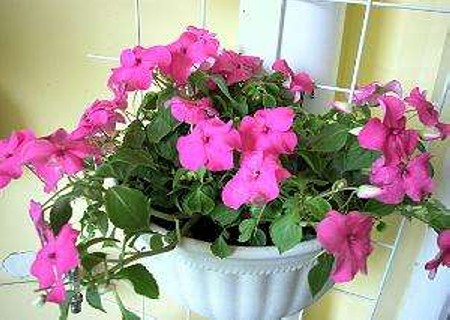
African impatiens is mostly propagated by cuttings to breed young plants. As long as the cutting method is correct and the later care and management methods are scientific and reasonable, roots can generally sprout in 7-10 days. So how do you propagate potted African impatiens? Below, the editor will share it with everyone.
1. Making Cuttings
Since it is propagation by cuttings, we first need to prepare the cuttings properly. Generally, cut some branches from a mature plant. When making cuttings, the standard is that they have a terminal bud, retain 3-5 nodes, and are about 5-10 cm long. Cut the branches into stem segments to serve as cuttings.
2. Treating the Cuttings
After trimming the branches into stem segments of a certain length, remove the flower buds and flowers on the stem segments, then remove the leaves on the lower part of the stem segments, leaving only a few leaves on the upper part of the stem segments.
3. The Cutting Process
Prepare a flower pot with a diameter of about 7.5 cm, then put the prepared perlite and other substrate into the flower pot, then use chopsticks or branches to poke some small holes of suitable size in the growing medium, and then insert the prepared cuttings into the holes. Insert about 3-5 cuttings into each flower pot with a diameter of about 7.5 cm.
4. Sealing the Pot Opening
After all the cuttings have been inserted into the pot soil, take a piece of plastic wrap and cover it over the pot opening to seal it. The benefit of doing this is to prevent water in the pot from evaporating so as to maintain the humidity of the pot soil, which is more conducive to the sprouting of the cuttings.
5. Adding Labels
After covering the flower pot opening with plastic wrap, put a label on the plastic wrap or on the outer wall of the pot to mark the type and name of the plant being propagated by cuttings, and also mark the cutting date, so that we can better keep cutting records.
6. Transplanting into Pots
Usually after 2-3 weeks, the cuttings can sprout roots. After the cutting seedlings have developed good roots, we can transplant them into pots. So how do you plant the cutting seedlings when transplanting them into pots?
1) Likewise choose a flower pot with a diameter of 7.5 cm, then fill it with growing medium that takes up 1/3 of the pot's volume, and then add a little slow-release fertilizer as base fertilizer.
2) Take the well-rooted cutting seedlings out of the cultivation pot, then plant them into the new pot, then fill the entire flower pot with growing medium, and finally carefully firm the soil around the plant.
3) After the cutting seedlings are planted, the young plants can be pinched back, which can ensure that the young plants sprout more side branches and gradually improve the beautiful plant shape of the potted African impatiens. (Author: Xiaoshu 2017-08-28 21:10)