Detailed Guide to Sowing Time and Sowing Methods for Persian Buttercup
Persian buttercup (Ranunculus asiaticus) is a perennial herbaceous flowering plant, available not only in single-flowered but also double-flowered forms, and its colors are rich and brilliant. Besides propagating by dividing the tubers, it can also be bred from seed to produce young plants. So, when should Persian buttercup be sown?
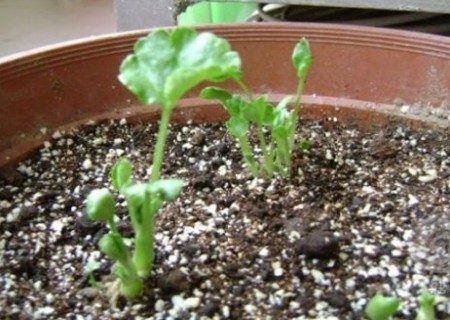
Persian buttercup is generally sown and propagated in October each spring, and the optimal suitable temperature for seed germination is between 10-15°C. But for ease of management and to increase the germination rate, we usually use a seed box for sowing and propagation. So, how do you sow Persian buttercup? The sowing process is as follows:
1. Before sowing, place small stones or broken tiles on the bottom of the box as a drainage layer, then spread a layer of coarse sand on top of the drainage layer, about 1-2 cm thick; next, cover it with pre-prepared sowing potting soil until it is about 2-3 cm from the rim of the box; finally, use a tool to level the potting soil, then press it down gently.
2. Scatter the previously prepared Persian buttercup seeds over the potting soil, then cover with a thin layer of fine soil until the scattered seeds are just completely covered. Next, use a tool to gently press down the newly covered fine soil, and finally place the seed box into clean water of moderate depth to soak, allowing moisture to gradually wet the potting soil through the drainage holes at the bottom of the box.
3. Take a piece of shade netting and cover the rim of the box with it, then move the seed box to a cool, ventilated place that is also sheltered from rain for care and management. During this period, be careful to keep the potting soil in a moist state, and the ambient temperature should also be kept at its optimal suitable germination temperature, namely 10-15°C. If nothing goes wrong, about 2 weeks later you will see the seeds begin to germinate.
4. Wait until about October, after the seedlings have all emerged, at which point we need to promptly move the seed box to a place where it can receive normal light. If it is cold and overcast weather or the cooling season has arrived, we should also promptly remove the shade netting and replace it with plastic film covering the rim of the box; this not only helps keep it warm and insulated, but also reduces water evaporation.