How to Propagate Bambusa multiplex by Cuttings? Teach You the Correct Cutting Method
In the previous article, the editor shared with you the method of growing seedlings from Bambusa multiplex seeds through sowing. In fact, Bambusa multiplex, like many potted flowering plants, can also be propagated into young plants through cuttings. So, how do you propagate Bambusa multiplex by cuttings? Today, the editor will share with you the cutting method for Bambusa multiplex.
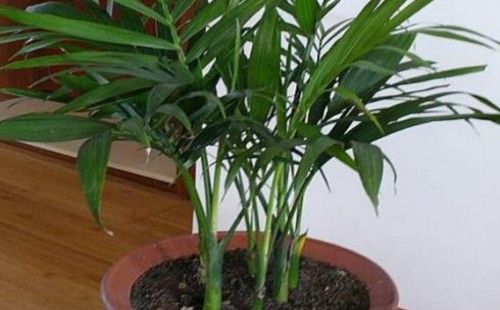
Bambusa multiplex cuttings often do not root easily, so both the timing and the method of cutting must be scientific and reasonable, with everything aimed at promoting successful sprouting. If conditions permit, cuttings can usually be taken from April to September, but May to June is the most suitable time; generally, mountain soil or clean sand is used as the cutting medium for Bambusa multiplex, and the cuttings are cut to a length of about 15 cm.
When it comes to the cuttings, we need to emphasize this point here, because whether the cutting succeeds depends greatly on how the cuttings are taken. Usually, 2-3 year old Bambusa multiplex stems and branches are cut as cuttings, and each cutting segment needs to have 1-3 nodes, with the lower part below the lowest node keeping a length of 2-2.5 cm as the part inserted into the soil; while the upper part of the cutting keeps a 1 cm nodeless section to prevent the node below from losing too much water, and the length of each cutting segment should be kept at about 15 cm.
When taking cuttings, first insert the reserved 2-2.5 cm of the cutting into the cutting bed, and the lowest stem node should be buried about 1 cm deep into the soil, not too deep or too shallow. If it is too deep, the part in the soil is prone to rotting; if it is too shallow, especially if the bottom stem node does not come into contact with the soil, it cannot sprout normally. This is because the sprouting points on the cutting are exactly at the stem nodes.
After the cuttings are completed, the most important thing is to manage watering well. On the one hand, the cutting bed needs to maintain suitable humidity for the cuttings to sprout; on the other hand, the air humidity should also be suitable, and misting 6-7 times a day can be maintained to increase humidity. The air humidity should be kept at around 85%, while direct sunlight should be avoided, but there should still be enough brightness. That is to say, before the cuttings sprout, the placement of the flowerpot should avoid 80%-90% of the light, which can effectively reduce water evaporation and is more conducive to promoting rooting.
If all goes well, signs of rooting on the cuttings can be seen in about 1 month. When the cuttings send out new leaves, it can be confirmed that the cutting propagation of Bambusa multiplex has been successful, and then a suitable time can be chosen for potting and transplanting.