What are the propagation methods for bamboo fern?
Potted bamboo fern has extremely high ornamental value, but how do you propagate bamboo fern? Like many potted green plants, bamboo fern can be propagated into young potted plants through sowing, cuttings, division, and other methods. However, bamboo fern is generally propagated into small seedlings by vertical cuttings, and the horizontal burying method is usually not suitable. Sowing is often rather tedious to carry out, and it is time-consuming and labor-intensive; division, although it looks relatively simple, can easily damage quite a few roots if you are not careful during the operation, thereby reducing the survival rate.
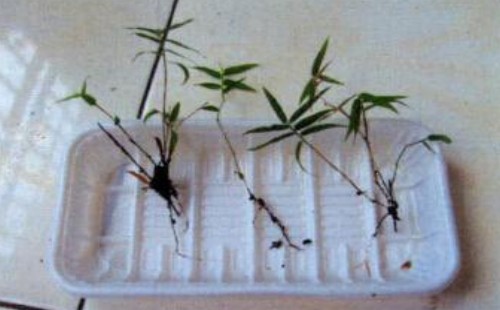
However, since bamboo fern can be propagated and grown into new plants through the three commonly used methods, the editor will also briefly introduce them here. Of course, the editor does not expect everyone to learn every propagation method, but at least you can choose one propagation method that suits you to cultivate new plants. If you can master all three of the following propagation methods well, that would naturally be even better, since no one ever suffers from having too many skills!
I. Sowing method
Sowing bamboo fern is mainly done in spring. But to sow, we first need to prepare robust seeds, and we also need to prepare the growing medium for sowing in advance. If you use bamboo fern seeds for sowing and propagation, you usually need to prepare slightly acidic soil, and the pH value should be adjusted to between 4.5-7. Then sow the seeds, but before sowing it is recommended to sun the growing medium or apply some carbendazim to disinfect and sterilize it.
Before sowing, the seeds also need to be soaked in warm water to promote germination, so as to achieve the goal of rapid growth. After sowing is completed, the thickness of the soil covering should be appropriate, and at the same time care should be taken to keep the growing medium at suitable moisture, so watering needs to be done in a timely manner. If all goes well, seedlings from the bamboo fern seeds can usually be seen in a little over 1 month.
II. Cutting method
The best time for bamboo fern cuttings is during May-June in summer, and the cutting medium is required to have good water permeability and a certain water-retention capacity. At the same time, it is advisable to cut 2-3 year old bamboo fern stems and branches as cuttings, then insert them into a cutting bed at a depth of about 2.5 cm. Avoid inserting the cuttings too deep or too shallow, otherwise neither is conducive to the survival of the cutting seedlings.
After the cuttings are completed, in addition to keeping the cutting bed at suitable moisture, we also need to regulate the air humidity well. Usually the air humidity needs to be kept at around 85%, so more water should be sprayed into the air to increase air humidity. Generally, misting should be carried out 6-7 times a day, and shading should also be done well to avoid direct sunlight and reduce water evaporation. If all goes well, roots and shoots usually form in 1 month.
III. Division method
Division of bamboo fern is also mostly carried out in spring and autumn, mainly by dividing overly dense clumps into several plants, then potting them separately. First, you need to choose a pot of lushly growing bamboo fern clumps, then remove them from the pot, and use a sharp blade to reasonably divide them along the rhizome part of the clumps, then pot and transplant them separately.
During this process, note that you must be careful when cutting the roots with a sharp blade, and avoid breaking or damaging the plant's roots as much as possible, because when the root system is extensively damaged or damaged to a relatively deep degree, it often affects survival. Therefore, care is needed during operation; usually the plant's root system is first untangled and then divided. After the clumps are scientifically divided into several portions, they just need to be planted separately into different flower pots.