Can Petunias Be Propagated by Cuttings? A Detailed Guide to Cutting Time
Petunias not only have vivid flowers but also come in a very rich range of colors, making them a great choice whether used in flower beds or grown as potted plants at home. Petunias have strong regeneration and sprouting ability and grow very quickly; more importantly, their flowering period is also very long, so they are highly suitable for ornamental purposes. Just imagine, in the season when petunias bloom, surrounded by a profusion of petunia flowers, what a pleasant mood it would bring us!
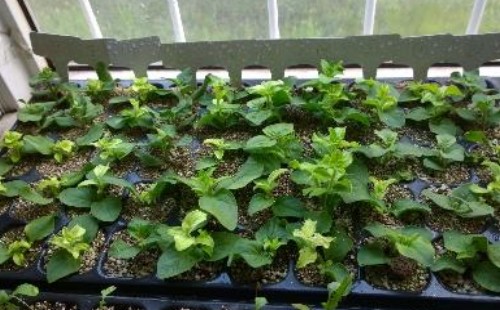
Many flowering plants can be propagated by cuttings to grow young plants, and cuttings can be divided into leaf cuttings, stem cuttings and root cuttings, etc. So, can petunias be propagated by cuttings? If so, when is the suitable time to take cuttings? This still needs to be discussed starting from the conditions for propagating flowering plants by cuttings.
The cutting propagation process of flowering plants is actually a process of asexual reproduction, mainly using different organs and tissues of the plant as cuttings, and it is a common method for cultivating young plants. Cutting propagation not only requires suitable objective conditions such as temperature, humidity and soil quality for growth, but the plant also needs to have the ability to sprout from cuttings.
First, in terms of objective factors, we need to create a basic environment suitable for petunia cutting sprouting and growth. The temperature should be maintained between 20-25°C, soil humidity should preferably be kept at around 50%, air humidity should preferably be kept at around 75%, and light should preferably be kept at around 30%-50%. When the light, temperature and medium conditions are all satisfied, whether cuttings can be carried out mainly depends on whether petunias have the ability to reproduce by cuttings.
Practice has shown that, when external conditions are suitable, petunias can be propagated by cuttings. Because petunias have extremely strong sprouting ability, as long as the temperature is suitable, cuttings can basically be taken throughout the year. However, there are certain requirements for selecting cuttings. Usually, after an adult petunia plant finishes flowering, the tender shoots at the top of the plant are cut off as cuttings, and the length should preferably be kept at about 10 cm; after cutting, if the care conditions are met, roots generally form in 2-3 weeks, and after about 1 month of growth they can basically be potted and transplanted.
However, if cuttings are taken outdoors in a natural environment, in addition to preparing nutrient soil, temperature and humidity conditions must also be met. There are not many situations outdoors where both temperature and humidity conditions are satisfied. According to its sprouting conditions and growth requirements, usually cuttings can only be taken in spring and summer, because taking cuttings in these two seasons makes it easier to meet the objective conditions, so the survival rate of cuttings is also relatively high.