How do you shape a Diospyros cathayensis bonsai? It's not hard once you master these methods
Diospyros cathayensis has small leaves and bears abundant fruit; both its foliage and its fruit have high ornamental value, making it a material for bonsai. Not only that, as a bonsai, Diospyros cathayensis also offers a particularly wide range of shaping methods and techniques, and shaping can be completed with pruning, binding, twisting, bruising, and pinching back. So, specifically, how do you shape a Diospyros cathayensis bonsai?
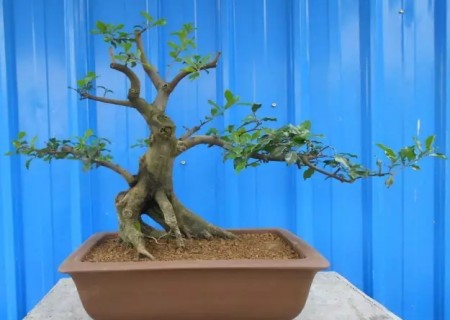
If you use an old stump of Diospyros cathayensis to create a bonsai shape, the stump material first needs to go through a stage of field planting to build up the trunk, and only when the framework of the old stump has basically formed and the branches have grown enough to basically meet the requirements for shaping can it be potted for further development.
The steps are as follows:
1. When the stump has been grown to a certain degree, take it out and carry out appropriate branch and root pruning before potting, which is what we usually call "thinning the branches and sorting the roots," so that we can pot it more easily and also promote better growth of the old stump.
2. Choose a pot of suitable size and mix the growing medium; once all the preparation work is done, next pot the old Diospyros cathayensis stump. If we pruned the branches and roots rather deeply beforehand, we should not use fertilizer when potting, and we need to prepare clean growing medium.
3. After potting is finished and it has returned to a normal growth state, we can apply an appropriate amount of fertilizer as a top dressing, and then decide how to prune and shape it according to the needs of the bonsai creation.
Diospyros cathayensis is a fruit-viewing bonsai tree, so in shaping design one should stick to the principle of "distinct layers, thin leaves and sparse branches, fruit display first." At the same time, the wood of Diospyros cathayensis is relatively tough, the tree vigor is fairly strong, and the root flare is fairly robust, so as long as the shaping effect is done well, it can be displayed in a majestic and spectacular posture.
Besides processing the main trunk and branches into a shape that gives a majestic impression, we can also shape its branches to create a kind of curvilinear beauty. Add to that the heavy crop of fruit all over the tree, and it will naturally also give people a pastoral scene, making the artistic conception of the Diospyros cathayensis bonsai deeper and the ornamental effect better.
To enhance the artistic charm and ornamental value of a Diospyros cathayensis bonsai, we can achieve this through shaping techniques. Because Diospyros cathayensis has strong sprouting ability and good flexibility, it is relatively tolerant of pruning and wiring, and shaping is mostly done by the method of "coarse wiring and fine pruning"; the shaping styles are also very many, and whether it is made into a formal upright style, a slanting style, a curved-trunk style, or a natural style, it can be made into an elegant, flowing, majestic and powerful form.
However, the shaping of a Diospyros cathayensis bonsai is mostly carried out in spring when growth starts or during the plum rain season. If shaping a young plant, the method of wiring combined with pruning is mostly used; if it is an old Diospyros cathayensis stump that has endured years of wind and rain, the choices are generally made according to the direction of the tree's form, mainly wiring and pruning the branches to cultivate a fresh and graceful crown section, while the trunk and roots generally do not need much carving, so as to highlight their quaint and rustic character.