Detailed Explanation of Peony Cutting Methods and Steps
Peonies, like many potted flowering plants, can be propagated into young seedlings through cuttings. Unlike many other flowering plants, however, peonies can be propagated not only by taking softwood cuttings but also by root cuttings. But since the method of using softwood cuttings to breed young seedlings is more widely adopted by the public, today the editor will share this cutting technique with everyone.
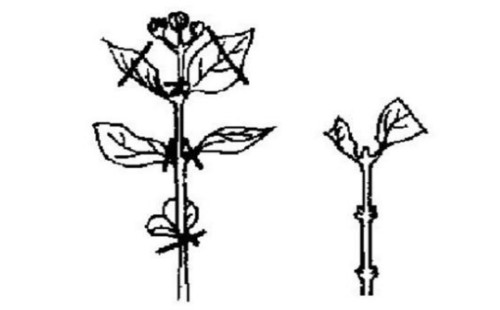
1. Selecting Softwood Branches
Peonies can have vigorous softwood branches cut from mature mother plants between April and June to make cuttings for propagation into young plants. The purpose of taking softwood branches as cuttings is that peony softwood branches grow relatively sturdy with good growth and development, and the branches contain fairly abundant nutrients; more importantly, the softwood branches are also rich in auxins and soluble nutrients such as soluble nitrogen, sugars and amino acids.
Moreover, the active enzymes in peony softwood branches are relatively good, and their regenerative capacity is very strong; while the proportions of scoparone and gibberellin in peony softwood branches are relatively low, so taking vigorous peony softwood branches as cuttings often results in a very high survival rate after cutting. This is indeed a good method for propagating potted peony seedlings.
2. Making Cuttings
After selecting suitable softwood branches, we can make the cuttings. First determine the cutting position; usually cutting at about 5-8 cm below the softwood branch is appropriate. But you need to ensure that the cutting made has 2-4 buds, while retaining 2-3 leaves. Relatively speaking, cuttings made from vigorous thick branches tend to have stronger sprouting ability than those from relatively thinner branches, and branches with more leaves sprout better than those with fewer leaves.
3. Soaking the Cuttings
After making the cuttings, place them in clean water to soak for half an hour to 1 hour so they fully absorb water. Then dip the base of the cutting in rooting powder to promote sprouting of the branch. Of course, if there is no rooting powder, you can also use a naphthalene acetic acid aqueous solution to soak the lower end for about 5 seconds. In this way, the purpose of promoting rapid rooting of the cuttings can likewise be achieved.
Of course, you can also use willow branch soak liquid to soak the cuttings. The method is: cut current-year willow branches, chop them into shorter small sections, and soak them in water for a week before use. Then place the cuttings in the willow branch soak liquid for half a day to 1 day, which can accelerate wound healing and greatly improve the survival effect.
3. The Cutting Process
Before cutting, you need to prepare the growing medium and make sure it has suitable moisture. Then insert the treated peony cuttings into the pre-prepared growing medium, and the part of the cutting inserted into the medium should preferably remain at about 3 cm. Then gently press the soil around the cutting to stabilize it, and also to make it contact the branch more fully, which is more conducive to the sprouting of the cutting.
4. Post-Cutting Management
After completing the cutting, we need to water thoroughly to maintain the growth needs of the cutting, then cover it with a layer of plastic film to keep it warm and moist. Usually the ambient temperature needs to be controlled between 20-25°C, and the humidity kept between 80%-90%, so it is necessary to frequently spray water and uncover the plastic film for ventilation. If all goes well, rooting can appear in at most 1 month.
After the peony cuttings have rooted, we need to appropriately control the frequency of watering and spraying, then remove the plastic film. Since peony cutting seedlings grow relatively slowly, after surviving, let them continue to grow in the seedling pot for a period until spring arrives before lifting and transplanting them. Because spring temperatures gradually rise and are relatively warm, and the cutting seedlings are also more active in growth, at this time potting and transplanting have a higher survival rate and it is easier for them to adapt to the pot.