How to shape a rhododendron bonsai to look better
When using pruning techniques on a rhododendron bonsai, we can combine them with artificial shaping. You can do this according to your personal preferences and design intentions, but the most basic principle is not to cause excessive damage to the plant or affect its normal growth. So, how do you shape a rhododendron bonsai?
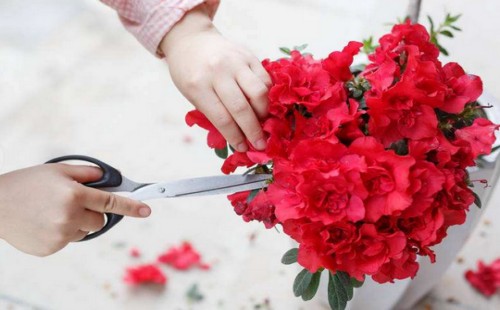
There are many shaping methods for rhododendron bonsai, but pruning is used most frequently and makes it easier to create a beautiful form. The most common shaping effects are pruning into an umbrella shape or a pagoda shape. Below, we will briefly look at these two shaping designs.
1. Umbrella shape
To create this plant shape effect, the main goal is to encourage more side branches to sprout from the lower part of the rhododendron bonsai tree, and then through reasonable pruning, make the branches distribute fairly evenly along the trunk. Sometimes, to achieve a certain shaping effect and aesthetic effect, we also need to use rope to tie and stretch the branches. When the rhododendron blooms, its flowers form a large flower ball, looking very magnificent, thus achieving the purpose of our shaping.
Technical points: Keep the main trunk at about 10 cm, and by removing the top growth point, let the plant grow into a state without a central trunk. This can encourage a large number of side branches to sprout, making the plant shape fuller and rounder. But the side branches that sprout for the first time can keep 4-5 as main branches, and then at the appropriate time, through pinching, gradually sprout more side branches, so they spread and extend evenly around. Usually, the upper branches need repeated pinching, while the lower branches can be appropriately retained. In this way, you can create an umbrella-shaped plant effect.
2. Pagoda shape
If you want to create a pagoda-shaped rhododendron bonsai, the pruning work needs to be carried out in good time according to the tree's vigor. Originally, reasonable pruning needs to be carried out promptly starting from the trunk-training period. Similarly, we need to first shape the branches at the bottom or lower layer, and then prune layer by layer upward until the entire plant is finally pruned into a pagoda shape.
Technical points: When the main trunk grows to a length of 10 cm, do not pinch or top it, so that it only extends a central trunk. Next, keep 2-4 layers of main branches on the central trunk, and every year pruning must be carried out in a timely and reasonable manner to shape it. The main thing is to control the extension range of the upper branches, cultivate the distribution of the lower branches, and appropriately control them level by level. Over time, it can be shaped into a bonsai tree with a pagoda-shaped plant effect.
In addition to the above two mainstream shaping effects, it can also be shaped into many other forms, such as hydrangea style, cantilever style, drooping-branch style, and coiled-dragon style. Here, the editor will not describe them one by one. However, it should be noted that during repotting, pruning techniques need to be used reasonably, usually cutting off overly dense branches, crossing branches, overlapping branches, horizontal branches, diseased and pest-infested branches, overly long slender roots, and old and weak roots. At the same time, for shaping needs, during the rhododendron's growing season it is also usually necessary to promptly adopt and flexibly use various methods such as bud rubbing, sprout removal, bud thinning, pinching, and removal of spent flowers.