Can Winter Jasmine Be Propagated by Cuttings? A Detailed Guide to the Cutting Method
Spring has come around again, and it is often said that spring is the season for sowing, so can winter jasmine be propagated in spring? The answer is yes. Many potted flowers and plants can be propagated into young plants through cuttings, so can winter jasmine be propagated by cuttings? Usually, winter jasmine is quite suitable for propagation into young plants by means of cuttings.
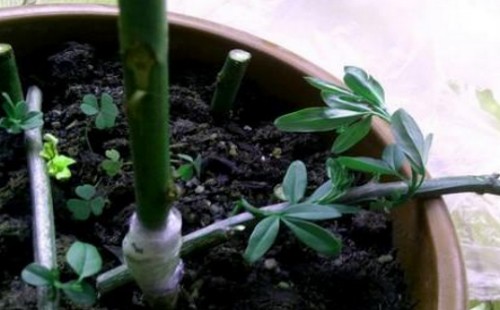
Winter jasmine cuttings can use hardwood cuttings, softwood cuttings, or even water propagation to produce young plants. Today, the editor will mainly introduce the soil-cutting method. In the next section, the editor will explain how to propagate young plants using the water-cutting method.
I. Cutting Time
Winter jasmine cuttings are usually taken in March in spring, but one-year-old or older hardwood branches need to be selected as cuttings; for branches that are not yet fully lignified and relatively soft, cuttings are usually more suitable in April; while new branches of the current year are often more suitable for cuttings during the dog days of summer. Therefore, the cutting time for winter jasmine often depends on the growth stage and hardness of the branches.
II. Selecting Cuttings
Based on what the editor explained above, we first cut healthy, robust branches as cuttings. Whether they are current-year branches or branches one year old or older, they can all be used for cuttings, but the choice of branch determines the cutting time. So, you can choose a suitable time, then cut branches of the corresponding hardness to make cuttings. However, the cuttings should be between 8-12 cm, and keeping 2 leaves at the tip is enough to reduce water evaporation.
III. Making the Cutting Bed
Adventitious roots often sprout below the nodes of winter jasmine branches, so the cutting method makes it relatively easy to survive, but when preparing the cutting soil, it must be done strictly according to requirements, otherwise the cutting may fail. If convenient, it is recommended to use clean river sand mixed with humus soil to make the cutting bed. This kind of soil is relatively loose, breathable and permeable, and has good fertility, so the cutting results will certainly be better.
IV. Cutting Process
Insert the prepared cuttings into the cutting bed, then place the cutting bed in a cool, ventilated place for management. During this period, appropriate watering is needed to keep the potting soil moist and promote rooting of the cuttings. After the cuttings have successfully rooted and grown steadily, they can be potted and transplanted into flower pots. After they have adjusted to the pot and resumed normal growth, we then appropriately increase light while restoring normal care and management.
The above is the method for propagating winter jasmine by cuttings, but to ensure the cuttings survive smoothly, we need to manage the following aspects well.
1. Cuttings
First, select healthy, pest-free and disease-free branches as cuttings. If they are softwood cuttings, insert them promptly, originally to avoid affecting survival due to excessive water loss. But whether old branches or softwood branches are used as cuttings, before cutting, the cut surface must undergo necessary sterilization and disinfection treatment, usually by applying plant ash, which can prevent the invasion of pests and diseases and also prevent rot.
2. Temperature
Temperature is also an important factor affecting the survival of cuttings. Usually, keeping the ambient temperature between 20-25°C makes it easier for cuttings to root, and the survival rate is also higher. If the temperature is too low, the cuttings will root relatively slowly; while if the temperature is too high, it is easy to cause rot at the cut surface of the cuttings. Therefore, suitable temperature is an important guarantee for successful cutting.
3. Humidity
When cutting, it is necessary to ensure the substrate has suitable humidity. If the cutting bed humidity is too low, the cuttings will fail to survive normally due to lack of water; if the cutting bed humidity is too high, it is easy to cause rot, leading to cutting failure. Therefore, a suitable humidity environment plays an important role in whether the cuttings can survive. If necessary, a layer of plastic film can be covered after cutting, which can help retain moisture. But the plastic film should also be opened frequently to exchange air, otherwise it will also affect the survival of the cuttings.