How to sow asparagus fern seeds? Detailed guide to the correct sowing method
Many people think asparagus fern (Asparagus setaceus) is only suitable as a potted foliage plant, but in fact it can also bloom. It is just that the flowers of asparagus fern are rather small, mostly white-green, and look very elegant and delicate. And after the flowers fade, berries gradually form, and once the berries ripen they turn black, and each berry can usually produce 1-3 seeds.
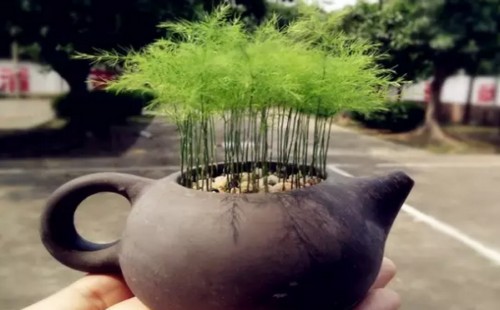
It is true that asparagus fern not only blooms but also sets seed, and more importantly it can be propagated into young seedlings by sowing, which is usually also the most important method of propagation. To collect more mature seeds, we usually choose mature asparagus fern plants that have grown for more than 3 years for seed production. But after collecting the seeds, how do you sow asparagus fern seeds? Below, the editor will introduce the sowing process for asparagus fern seeds.
1. After harvesting the mature seeds, remove the outer flesh, then wash them clean, and at the same time select plump, robust seeds for sowing.
2. Next, soak the selected seeds in clean water for a period of time, usually 1-2 weeks. During this time, be sure to change the water frequently, generally keeping to changing the clean water once a day.
3. After soaking the seeds, to improve the germination rate and survival rate, germination acceleration treatment is usually also needed. After soaking, take the seeds out and place them in moist sphagnum moss for germination acceleration; if the environment is suitable, sprouts will usually begin to appear one after another in about 1 week.
4. Before sowing, first prepare a pot, pour in culture soil to about 80% full, then use tweezers to gently pick up the seeds that have been soaked and germination-accelerated and place them evenly on the culture soil. Be careful to keep the sprouting point facing up to avoid deformed or weak seedlings.
5. After all the seeds have been placed, spread cleaned vermiculite or a similar material over the soil surface until all the seeds are covered. Usually it is best to just barely cover them so the seeds are no longer visible; finally water thoroughly once, then place the pot in a ventilated, bright spot for care.
6. During this period, manage light, temperature and moisture, and provide the seedlings with as suitable a growing environment as possible. As long as the environment is suitable, asparagus fern seeds sprout relatively quickly after germination; generally after 3 days the seedlings will visibly grow. It can be said that the seedlings look different every day as they grow.
7. After a period of cultivation, the asparagus fern seedlings in the pot have already turned into a patch of green, looking like they are growing well and very cute. At this point, we can place a few small objects in the pot as decoration, making it look even more vivid and lively.