Care Methods and Management Points After Baby's Breath Germination
Baby's breath has slender and dense flower stems, with small flowers in great numbers. Grown as a potted plant, it can present itself in the form of a large flower ball when in bloom, very elegant. Moreover, many people like to sow and propagate potted seedlings at home, and as long as the ambient temperature and humidity are suitable, the seeds germinate quite quickly. But how do you care for baby's breath after germination?
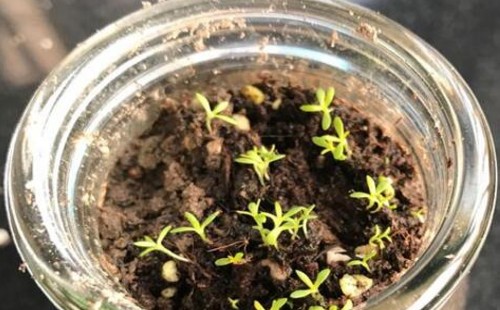
Baby's breath can be sown in spring or autumn, because the temperatures in spring and autumn are more suitable, and the optimal germination temperature for the seeds is between 21-22°C. If the humidity is suitable, seedlings may emerge normally after 1 week. After emergence, cultivating the seedlings is something we need to do carefully, because baby's breath is quite fragile at the seedling stage and death can easily occur. Therefore, mastering certain care and management knowledge is very necessary.
I. Light
After the seeds germinate, we need to promptly provide them with light gradually to promote photosynthesis and accelerate growth. But after the seeds sprout, they are often very tender. If the light is too strong, they can easily be scorched and wilted, or even killed by the sun. So even when providing light, we need to avoid overly strong light, and as the seedlings grow, increase the light gradually. Throughout the entire seedling cultivation period, direct strong light must be avoided; simply place them in the sun during the morning and evening when the light is softer.
II. Watering
Water management for baby's breath at the seedling stage is also very important. After all, it is a plant that does not tolerate drought, let alone during the seedling growth period, when the water demand is relatively large, so that rapid growth can be maintained and poor growth due to lack of water can be avoided. But if cared for indoors, the amount of water evaporation is relatively small, so do not water too much; just keep the potting soil consistently somewhat moist. Also, to make it easier to control the amount of water, it is usually best to replenish water by spraying, which also makes the watering more even.
III. Fertilizing
Cultivating seedlings requires proper topdressing so that there are enough nutrients to maintain rapid growth. But fertilizing should mainly use quick-acting compound fertilizer with nitrogen, phosphorus and potassium, and try to apply thin fertilizer frequently; a dilute foliar fertilizer can be sprayed once a week. However, during the growth period, because nutrients are relatively abundant, the seedlings often become leggy, and their main stems often grow very slender, making them prone to lodging and breaking. So we also need to cover the soil in time.
IV. Thinning
To make baby's breath seedlings grow more pleasingly, timely thinning is a step we must do well. Usually, when the seedlings grow 2 leaves, if the density of emerged seedlings after sowing is found to be too high, we should thin them in time in this situation so as to keep a suitable distance and density between the seedlings, thereby avoiding nutrient competition caused by too many and too crowded seedlings, and avoiding the phenomenon of slow and uneven growth in a large number of seedlings. Thinning mainly involves removing the weaker, overly short, and severely lodged seedlings.
After the above aspects of care and management, when the seedlings have smoothly produced about 4 leaves, we can choose the right time to pot them up and transplant them. For transplanting the seedlings, usually choose a small flower pot with a diameter of about 10 cm. After they adapt to the pot, pay attention to timely pinching and topping to encourage the sprouting and growth of side branches.