How to Water a Crabapple Bonsai? Detailed Guide to the Correct Methods and Techniques
Crabapple blossoms are beautiful, and people like to call them “fairies among flowers.” There are also quite a few varieties, the more famous ones being Malus micromalus, Rieger begonia, Malus halliana, and wax begonia, all deeply loved by people, especially for viewing as bonsai trees. But routine care and management are also very important. Only when care and management are done well can their ornamental value be fully brought out.
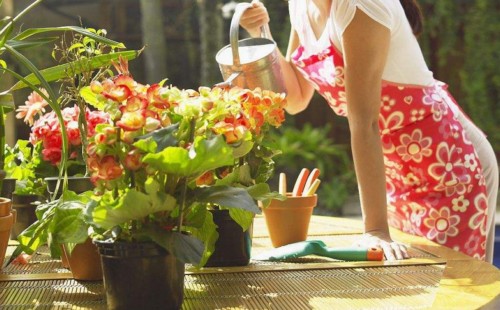
The care and management of crabapple bonsai mainly involves doing a good job in several areas: light and temperature, water and fertilizer, pruning, and repotting, with daily watering management being especially important, because watering is often one of the most frequently used care methods in the process of maintaining bonsai trees. Normally, watering should not be excessive, and especially avoid water accumulating in the pot or the potting soil being too wet, otherwise it easily causes root rot. Generally, you only need to keep the potting soil at a humidity suitable for crabapple growth. So, specifically, how do you water a crabapple bonsai?
For watering crabapple, moderation is the most basic requirement. Spring and summer are the peak growing seasons for crabapple, when the demand for water is much greater than in other seasons, so watering should be increased accordingly. As long as the pot has good aeration and drains smoothly, you can water boldly and generously. During the high-temperature period in summer, watering should be even more timely and sufficient, but the timing of watering should avoid noon as much as possible and be done mostly in the morning and evening, because at noon the temperature is high and the water evaporates too quickly after being poured, often failing to achieve the purpose of replenishing water, while the plant remains in a state of water deficiency, which may cause the leaf edges to become scorched and withered.
After entering autumn, as the temperature gradually turns cooler, we need to reduce watering in time. Under normal conditions, you can keep watering thoroughly once a week, but in autumn as the temperature drops, the watering frequency needs to be reduced appropriately. However, watering crabapple should wait until the potting soil becomes dry and then promptly water thoroughly, until water flows out from the drainage hole at the bottom of the pot. So before watering, pay attention to observing the dry and wet state of the potting soil, and then decide whether watering is necessary. Even if watering is needed, after watering thoroughly, also check how the water seeps down and penetrates, to avoid water accumulating in the pot and causing root rot.
After leaf drop occurs in winter, watering should not only be reduced but also strictly controlled, except during the period of forcing blooms. This is because crabapple consumes a large amount of water and nutrients during the flowering period, so during the bloom-forcing period more watering is needed to support abundant flowering. The reason for less watering in winter is that the temperature is low; if watering too much makes the potting soil too wet, it not only easily causes the plant to suffer cold damage and affects its successful overwintering, but also easily leads to root rot.
In short, for watering crabapple bonsai, generally you only need to keep the potting soil moist, and by all means avoid water accumulating in the pot and causing root rot. In spring and summer, the vigorous growth period often requires more water, so it is not advisable for the potting soil to dry out frequently, especially during the flowering period when you must ensure the potting soil has sufficient moisture. In autumn and winter, control water scientifically and water reasonably. Only in this way can you grow crabapple well, without various poor-growth symptoms caused by insufficient or excessive water.