When is the best time to sow cosmos, and how do you plant cosmos seeds?
Cosmos (Cosmos bipinnatus) comes in rich colors and blooms beautifully. As a household potted plant, it can be propagated from seedlings by sowing or cuttings. But this flower tolerates neither the high heat of summer nor the low temperatures of winter, so routine care and management must be done promptly and properly. Since young plants can be bred by sowing, when is the best time to sow cosmos? How do you plant cosmos seeds? Today, the editor will share with you the method for planting cosmos seeds.
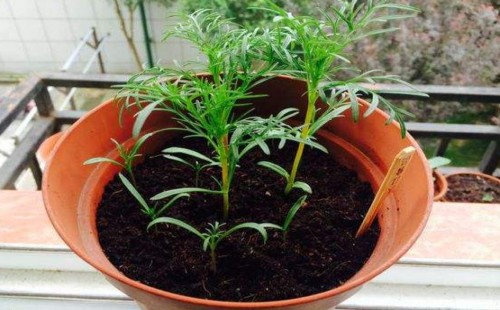
Practice has shown that sowing cosmos in early spring is the most suitable, because after sowing in early spring, the flowers usually come into bloom by May, when summer arrives. Cosmos also has a fairly long flowering period, and the flowers only gradually fade by August. But if care and management are done well, after autumn arrives cosmos can often bloom a second time, with the flowering period lasting until the first frost.
If you choose to sow in August, the flowers usually do not appear until October, and at that time the plants tend to be rather short and small; even if they look compact, their ornamental value is not very high. So the most suitable sowing season is early spring. Below, let us take a look at how to plant cosmos seeds.
After preparing the potting soil and flowerpot, simply scatter the cosmos seeds over the soil, then cover them with a thin layer of fine soil, and water thoroughly. However, it is recommended to replenish water by the soak-watering method (bottom watering), since this not only prevents the seeds from being washed out of the soil by direct watering, but also achieves the goal of fully replenishing water. Then move the flowerpot to a cool place with good air circulation.
When there is sufficient water, as long as the growing environment for the seeds stays at around 15°C, they germinate very easily; from sowing to sprouting usually takes only 1 week. After the seeds sprout, move the flowerpot to a place with light so they can gradually receive light. But pay attention to the light intensity and avoid placing them in an environment with overly strong light, because the seedlings are still quite tender and fragile, and too strong light can easily scorch or even kill the seedlings.
For seedlings that have entered the growth period, do not apply large amounts of water and fertilizer, otherwise the plants easily become leggy. If the plant's growth height is not controlled in time, it may fail to bloom later; even if a small amount of flowering occurs, the quality and effect of the blooms will be unsatisfactory. Therefore, control water and fertilizer at the right time, and combine this with pinching off the growing tips to control plant shape, so that more side branches can sprout and a compact effect is achieved, providing a guarantee for the plant to bloom smoothly later while also ensuring the plant's attractive shape.
Moreover, for cosmos grown as a potted plant, pinching needs to be done repeatedly many times, mainly by pinching off the most vigorous growing point at the center of the plant; this way the plant will sprout a large number of side branches and produce more flowers. But after all, cosmos likes light and does not tolerate water; even in a relatively poor soil environment, it can often produce brilliant and beautiful flowers, so routine care does not require frequent watering and fertilizing, and it will still grow very well.
In addition to normal light, temperature, water and fertilizer management, caring for potted cosmos also requires good pest and disease prevention and control. The main insect pests are commonly aphids and red spider mites, so it is necessary to increase the ventilation and light penetration of the potted plant, and at the same time use the corresponding pesticides to kill them.