When should a papaya bonsai be pruned? Learn the correct pruning method
If you want to keep a papaya bonsai looking good and also lay a solid foundation for later flowering and fruiting, the implementation of pruning measures often plays a very key role in daily care and management. So, when should a papaya bonsai be pruned? How should it be pruned?
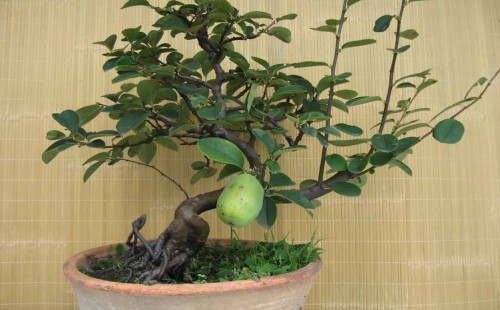
In the daily care and management of papaya bonsai, the purpose of pruning is to improve the ventilation and light penetration of the bonsai tree, promote photosynthesis, and keep the papaya tree growing well, while also regulating the distribution of nutrients. Overall, it is all meant to promote growth while maintaining the original attractive tree shape.
Papaya bonsai is pruned in spring and summer, that is, spring pruning and summer pruning. But in many southern regions where winter is relatively warm and frost damage is unlikely, pruning can sometimes also be done. However, if the wounds left after winter pruning are more than 2 cm in diameter, they need to be sealed with paraffin, mud slurry, or similar materials to protect them and promote wound healing.
The spring pruning time is generally from mid-to-late February to early March. It mainly involves thinning and heading back a papaya tree that is already in the fruiting stage. Through thinning and heading back, a large amount of nutrients can be saved for the plant, making the tree grow more vigorously and set fruit more reliably, while the fruit, supported by more nutrients, will also be more robust and of higher quality.
Summer pruning mainly involves timely pinching of newly sprouted shoots on the papaya tree, and also removing useless young buds sprouting on the branches. Of course, fruit thinning should also be done as needed. It mainly involves thinning out fruit that has grown too abundantly for a time, avoiding excessive nutrient dispersal, reducing competition, and allowing nutrients to be sent in a concentrated way to the tree body and the retained fruit. This can likewise achieve the effect of improving tree vigor and making the fruit stronger.
For pruning a papaya bonsai, the principles are usually followed of "prune large branches first, then small branches," "prune the outside first, then the inside," and "prune the lower part first, then the upper part." By applying pruning scientifically and reasonably, the pruned bonsai papaya tree will show a posture with more even distribution of branches and leaves inside and out, and a more reasonable branch arrangement.
In this case, sunlight shining down from the treetop passes through the gaps between branches and leaves into the interior of the tree, allowing both the inner and outer layers to receive light, thereby increasing the light-receiving area of branches and leaves and increasing photosynthesis. This is very important for promoting the growth of the papaya bonsai tree. The tree shadow on the ground also becomes like sieve holes, the trunk will not look bare, the tree body will not show obvious hollowing, and the bonsai will also be more beautiful.