How to Propagate Impatiens? A Detailed Guide to Common Propagation Methods
Impatiens can not only be used for dyeing fingernails, but also grown as potted plants for ornamental enjoyment. Impatiens growing in the wild generally reproduce the next generation through self-seeding, but when grown as potted plants, how do you propagate impatiens? Today, the editor will share with you the propagation methods for impatiens.
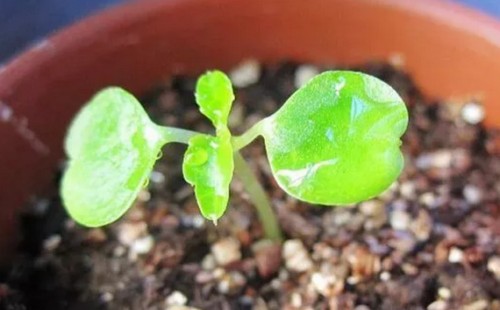
Impatiens has a certain degree of drought tolerance, but its cold tolerance is relatively poor, so it also prefers ample sunlight, and its requirements for potting soil are not very strict. Usually, sandy loam with good permeability is sufficient. Impatiens mainly reproduces seedlings through sowing, and the germination rate is also relatively high.
However, impatiens seeds should be collected promptly when they mature, otherwise the seeds will be ejected from the seed pods, making them difficult to collect. Generally, when the outer skin of the seed pod slightly shows yellow, it is time to collect them promptly. Moreover, impatiens has strong vitality, and with a little selection before sowing, a 100% germination rate can be achieved. Even if stored for 4-5 years before being taken out and sown, the germination rate remains relatively high.
Impatiens is usually sown in early to mid-April in spring, then covered with a layer of culture soil about 0.3-0.4 cm thick. During this period, pay attention to shading and moisture retention. If all goes well, sprouts will emerge after 1 week. When the seedlings produce 2-3 leaves, they can be transplanted with the soil around their roots. The actual potting and planting can also be done at an appropriate time based on the later growth conditions of the seedlings. If later care and management are done scientifically, flowering can begin in June of summer.
In addition to propagation by sowing, impatiens can also be propagated by taking cuttings to grow seedlings. However, compared with the sowing method, the requirements for cuttings are often much higher, while the survival rate is relatively lower. Therefore, the sowing method is generally used to propagate seedlings. To improve the survival rate of cuttings, the cutting conditions must be met, the cutting method must be scientific, and more care is needed in maintenance and management.
For impatiens cuttings, seedling plug trays can be used. The culture medium can be made from wood shavings, vermiculite and peat ash, mixed in a ratio of 3:3:4. Then cut healthy, robust branches from the mother plant as cuttings, but the cuttings must have more than 3 nodes to ensure that they can sprout after rooting.
For impatiens cuttings, moist soil should be used. After gently inserting the cuttings into the medium, water promptly, and after watering, spray with chlorothalonil for 10 minutes every half hour to keep the leaves moist. In addition to doing a good job of watering, avoid direct sunlight before rooting and sprouting. Roots can form in at most 2 weeks.
When the seedlings grow to a height of about 10 cm, we should promptly pinch or top them. Only 2-3 nodes need to be kept on the main branch, which will encourage the seedlings to produce more side branches. Use this method until the seedlings grow to a size you are satisfied with. Usually after more than 3 months, the seedlings will gradually grow larger and form a relatively complete canopy.