How to Propagate Pennywort? A Detailed Guide to the Cutting Method
Pennywort (Hydrocotyle vulgaris) carries the meaning of good luck and wealth. Placing it in a pot on a balcony or windowsill not only does a great job of decorating the space, but also gives people a fresh feeling. Moreover, pennywort can be grown either in water or in soil, and its propagation method is very simple, so how do you propagate pennywort?
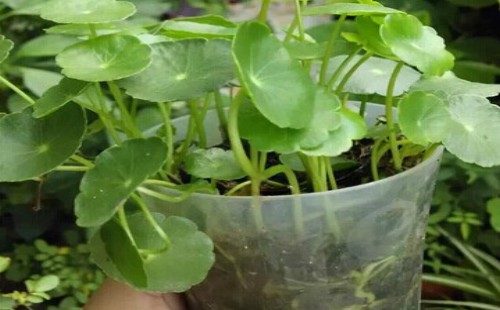
Pennywort is very easy to root from cuttings. You only need to soak its rhizomes in water or bury them in moist potting soil, and they will usually take root successfully. Propagating by cuttings makes it easy to grow a large potful. Below, the editor will share with you the cutting propagation method for pennywort.
1. Cut a few healthy, vigorous stems from pennywort you happen to find and bring them home; it is fine even if they have no leaves. As long as the cut stems are vigorous and have rhizomes, they will easily survive after being planted as cuttings.
2. Prepare a plastic cup as the container for the cuttings. Of course, it can also be another container, such as a drinking glass, as long as the bottom does not leak. There is no need to worry too much about size and shape; just use any cup that is convenient for you.
3. Put some humus-rich soil into the prepared cup, then add an appropriate amount of sand; the more fertile, the better. There is no need to add fertilizer either; it just needs to be loose enough, because if nutrients are insufficient, you can apply fertilizer later. For now, you only need to moisten the potting soil.
4. Bury the base of the pennywort stems you cut back into the moist potting soil. Be careful to keep a certain distance between the stems; they should not be too close to each other, otherwise after the pennywort grows larger later, it will look too crowded.
5. After the cuttings have rested for 2-3 days in a cool, ventilated place to recover, place them in sunlight so they can receive plenty of light. As long as the light is not especially strong, there is no need to worry that the cuttings will be burned or killed by the sun.
6. If the cuttings appear to have dead branches and yellow leaves, and their growth is relatively weak and they look rather thin and small, then we need to apply fertilizer in time.
As long as you manage light and water and fertilizer well, pennywort will maintain a good growth state, and it is very easy for it to fill the pot. In winter, you can bury all the rhizomes in the soil, and when the temperature warms up the following year, they will sprout and spread leaves again.