How to Choose Rose Cuttings? A Detailed Guide to Selection Methods
Rose seedlings are mostly propagated by means of cuttings, and whether the propagation of seedlings succeeds depends crucially on the choice of stems. The higher the quality of the stems, the higher the success rate after cutting will naturally be; conversely, the lower the quality of the stems, the lower the survival rate after cutting will be. So how do you choose rose cuttings? Today, the editor will briefly share with you the methods for choosing rose cuttings.
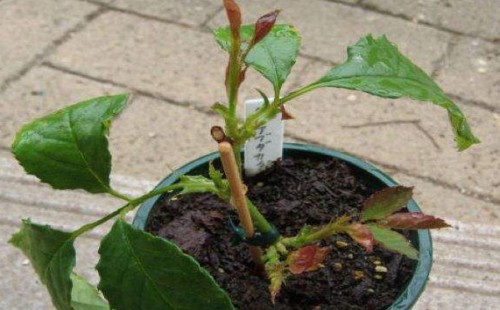
Before rose stems are cut, they usually need to go through multiple steps such as disinfection and soaking in rooting solution, which will better promote the sprouting and rooting of the cuttings, but this alone is not enough. First we need to ensure that the quality of the chosen stems is high enough, as this is the fundamental condition for ensuring the cuttings survive smoothly. In order to obtain high-quality cuttings, we usually make our selection according to the following points.
1. The leaves on the chosen stems must be robust and full, because whether roses can root smoothly depends greatly on robust, full leaves. For the stems to root smoothly, the leaves on the stems must necessarily carry out photosynthesis smoothly. If the leaves themselves are relatively weak, they will also easily fall off after being cut, and the cutting will inevitably fail. Therefore, the robustness of the leaves largely determines the success or failure of the cutting.
2. Do not choose stems with sprouting buds, otherwise new shoots will quickly sprout in a short time after cutting. If new shoots sprout prematurely but no roots have formed, the cutting seedling cannot absorb water and nutrients through its root system. Moreover, the water and nutrients in the cutting are limited after all, and are not enough to support the growth of new shoots, so after a period of time the stems will turn black and the tender shoots will wither and die. Therefore, when choosing stems, we must ensure that there are bud eyes on the stems, but at the same time also avoid the phenomenon of buds that are in the process of sprouting.
3. Do not blindly cut stems as cuttings; usually you need to choose robustly growing stems, which is the same principle as the previous point. If relatively thin and weak stems are chosen for cutting, because the nutrients stored in the stems are relatively few, after cutting there will not be enough nutrients to sustain growth, which often leads to failure of the cutting. Conversely, only when the chosen stems are robust enough will there be enough nutrients in the stems after cutting to sustain and promote rooting and sprouting.
The above are the requirements for choosing stems when cutting roses, and can also be regarded as the basic principles for choosing stems. Only when we choose robustly growing branches and leaves for cutting can we often succeed and cultivate high-quality rose cuttings.