How to prune a pine bonsai? Master the timing and methods of pruning
Pine bonsai is a fairly common variety in bonsai art creation, but it often presents people with a positive and uplifting spirit through its elegant image and upright temperament. It is precisely because the pine's perfect external image is combined with its tenacious inner character that its own advantages are brought into full play, so many bonsai creators like to use it as material.
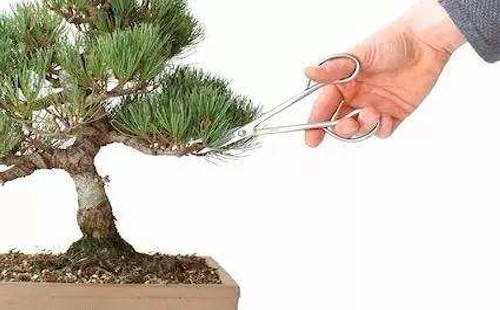
In order to enable a pine bonsai to have and maintain a beautiful tree shape over the long term, improve the ventilation and light penetration of the tree body, and at the same time improve its ability to resist pests and diseases, pruning techniques often play a very important role in the process of care and management. So when should a pine bonsai be pruned? And how should it be pruned?
Pine bonsai is mostly pruned in autumn, and sometimes this can continue into February of the following spring, but generally it needs to be carried out according to styling needs. Usually, the young shoots grown from the autumn buds that sprouted the previous year and the summer buds that sprouted in the current year should not be pruned, but should be retained as much as possible, while old leaves that grew before the previous year should be properly cut off. Moreover, after a bonsai pine has been shaped, it should be roughly pruned into form in a timely manner, which also promotes the natural sprouting and growth of its branches.
In addition, the choice of the cut position that needs pruning is very important. Generally, do not cut at the very base of the branch, but instead carry it out at the branching part, so a thinning-type pruning treatment should be adopted. And if the leaves grow too many and too lush, the leaves growing below the outline line should also be reasonably partially cut off.
The pruning of a pine bonsai needs to be carried out according to the characteristics of the plant shape and the needs of styling. The original intention is mainly to reasonably refine the tree's plant shape in order to achieve a relatively ideal display effect. In particular, old branches and old leaves with poor growth capacity should be given key removal during pruning to improve the permeability of the tree body, thereby increasing photosynthesis, promoting the massive sprouting of new branches and new leaves, and keeping the bonsai tree always youthful and vigorous.
The pruning of a pine bonsai must follow certain rules, and it must not be blindly cut at random, otherwise it will not only fail to promote the sprouting and growth of new branches and new leaves, but may even bring significant losses. The main purpose of pruning is to promote growth and improve the ornamental value of the bonsai by refining the plant shape, so during pruning it is usually not advisable to adopt a method of extensive heavy pruning.
The pruning of a pine bonsai mainly includes two aspects: bud pruning and branch pruning. Bud pruning mainly means cutting off the overly long and overly prominent bud tips growing at the top shoots of the bonsai tree, and the part cut off should account for 1/3-1/2 of the entire branch. By cutting off the terminal buds, the needles can be prompted to grow more luxuriantly and shorter, while the branches and trunk will become thicker. Conversely, if pruning is not carried out in time for a long time and the tree is allowed to grow freely, it will inevitably affect the beauty of the plant shape, because the distribution of branches and leaves is relatively natural and appears rather messy, and the tree vigor will also weaken, so the ornamental quality of the bonsai will naturally be greatly reduced.
Branch pruning can continue from late autumn of the previous year to February of the following spring, because during this period the pine is basically in a dormant state and is relatively suitable for pruning. During this time, the main task is to cut off branches such as leggy branches, messy branches, and old, weak, diseased, and damaged branches. For large branches, if a relatively large wound is formed after pruning or shortening, the wound needs to be sealed promptly with adhesive tape to prevent excessive sap from seeping out and causing harm to the plant.
However, considering the aesthetics of the bonsai, pruning needs to be combined with the art of styling. During pruning, the principles should be a natural posture, appropriate choices of what to keep and remove, and reasonable layout, so that an elegant pine bonsai can be created. Therefore, this places relatively high demands on bonsai creators, who must not only possess skilled pruning techniques but also have fairly deep artistic accomplishment, requiring creators to always have a clear plan in mind.