What is the best rootstock for grafting winter jasmine
Winter jasmine is a very important landscaping tree species in our country. Because of its high ornamental value, whether it is used to beautify the urban environment or made into a bonsai, it is very pleasing to look at. And winter jasmine, as a bonsai tree species with a very outstanding ornamental effect, is deeply favored by the vast number of bonsai enthusiasts. Winter jasmine is mostly propagated into young plants by cuttings and division, but quite a few people also like to use grafting to breed potted seedlings.
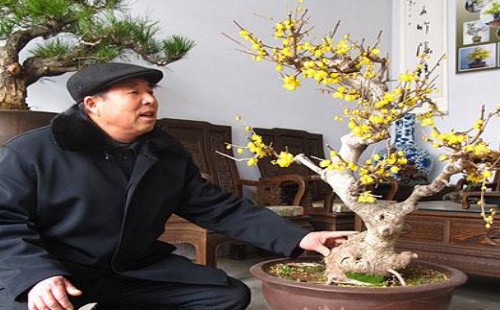
The exquisite winter jasmine bonsai you see at the flower market have very beautiful shapes, but their prices are quite high, so it is believed that they will have good development prospects for a long time to come. And its unique flower posture often makes it hard to find a substitute product in the bonsai world. Winter jasmine bonsai produced through grafting often have even better plant forms, and their ornamental value can also be doubled. So, what is used to graft winter jasmine?
According to the growth habits of winter jasmine and the characteristics of its family and genus, there are many tree species suitable for grafting, but the most suitable species as rootstock are Ligustrum (water privet), wild winter jasmine, Tanchun jasmine, jasmine, and strong-fragrance Tanchun jasmine, etc. Because these tree species are more closely related to winter jasmine, the grafted winter jasmine is more likely to survive, has a more beautiful plant form, and is more pleasing to look at.
Winter jasmine grafting usually adopts the side grafting method, which is also a very commonly used grafting technique. The characteristic of the original side grafting method is that it is suitable for tree species with relatively thin rootstock, especially suitable for coniferous tree species. It is not only simple to operate, but the grafted seedlings are also easier to survive. More importantly, the side grafting method does not have particularly high requirements for the rootstock. After the graft survives, grafting can continue in the same year, and multiple grafts can even be carried out on one rootstock. Below, the editor will take water privet seedlings as an example to briefly introduce the method of grafting winter jasmine by side grafting.
First, select potted water privet seedlings with a diameter at breast height of more than 2 cm as the rootstock tree species, and carry out side grafting at a height of about 1 m before growth begins in early spring. For the scion, use current-year winter jasmine branches, cut them to a length of about 8-10 cm, and then carry out side grafting. After making the grafting cut on the rootstock, insert the prepared scion into it, and wrap the grafted part several times with plastic film. Finally, cover the plant with a plastic bag. When the grafted seedling survives and sprouts young buds, prick a few holes in the plastic bag to allow air exchange and to harden the seedling.
When the young plant grows to a certain height, the bag can be removed, and then gradually provide it with light, but avoid direct sunlight during strong light periods, so as to prevent the tender young plant from being sunburned and wilting. Then pinch the grafted seedling as appropriate to encourage the young plant to sprout more side branches, making the potted plant form fuller. At the same time, you can also begin cultivating the crown according to the design needs of the bonsai.