Can lavender be propagated by cuttings? Learn the correct method
Because of its striking fragrance and high ornamental value, lavender is the top choice for many gardening friends as a houseplant. So, can lavender be propagated by cuttings? In fact, lavender can be propagated by sowing seeds, cuttings, layering, and division of stems. However, all things considered, as a houseplant grower, the cutting method is mostly used to raise potted seedlings.
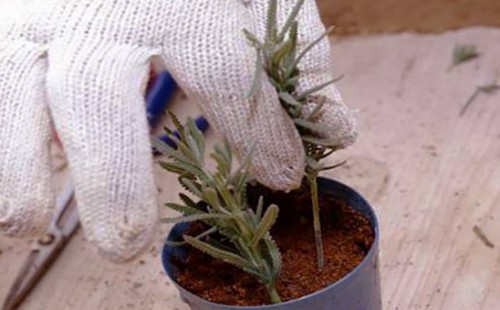
Cuttings are a means of propagating young plants commonly used for many flowering plants. They are not only easy to handle, but also have a relatively high survival rate. And repotting later is also very convenient. Below, the editor will share with you the cutting method for lavender!
I. Cutting time
Lavender cutting propagation can be done in spring and autumn, and can be carried out from the Mid-Autumn Festival of the previous year to the Dragon Boat Festival of the following year. Even in summer, softwood cuttings can be taken and survive. The only thing is that summer temperatures are too high, so the requirements for the cutting environment are naturally relatively high, and moisture retention must be done well, otherwise the cuttings are prone to wilting due to dehydration. In autumn, the temperature mostly stays between 15-25°C, which is most suitable for propagating lavender by cuttings.
II. Selection of cuttings
The quality of the cuttings will directly affect the survival results of cutting propagation. Therefore, we usually need to choose well-developed, robust branches as cuttings. Generally, robust branches are cut from the mature plant for cuttings, cutting the branch at an angle at a distance of about 10 cm down from the first leaf. If there are flowers on the branch, remove the flowers, and also remove about 2/3 of the leaves on the cutting to avoid consuming nutrients after cutting.
III. Cutting process
First, mix perlite and peat soil in equal proportions, stir well, and use the mixture as the cutting medium. Then spray the cutting medium with water to moisten it, and insert the prepared cuttings into the medium, with a depth of about 3 cm being appropriate. Finally, place the pot with the cuttings in a place where it can receive scattered light and has good ventilation for care. During this period, do a good job of watering and moisturizing, avoid direct sunlight, and roots and sprouts can appear in about 3-4 weeks. Then resume normal care and management.
IV. Seedling stage management
When the young seedlings successfully take root and sprout, gradually provide them with light, and pay attention to adjusting the temperature well and maintaining suitable humidity, so as to better promote root growth in the seedlings and keep the seedlings growing well. Lavender seedlings are relatively sensitive to water, so they should not be watered too much, and should not be given heavy watering; it is best to keep the potting soil slightly dry. After the cuttings have grown for 2 months, we can transplant and plant them out.